

Planning a luxury trip to Albania means every detail should reflect comfort and style, starting with your rental car. Choosing the right premium vehicle and understanding unique European rental policies can transform your visit, whether you’re attending business meetings in Tirana or exploring the Albanian Riviera. This guide walks you through every smart move for a seamless and premium rental experience, helping you book with total confidence and avoid costly surprises.
Table of Contents
- Step 1: Research Premium Car Options And Rental Policies
- Step 2: Book Your Luxury Vehicle Securely Online
- Step 3: Prepare Traveler Documents And Payment Methods
- Step 4: Pick Up Your Rental And Inspect Vehicle Quality
- Step 5: Confirm Terms And Finalize Your Travel Arrangements
Quick Summary
| Important Insight | Explanation |
|---|---|
| 1. Research Rental Options Thoroughly | Understand vehicle types and rental policies specific to your travel destination to make informed decisions. |
| 2. Verify Rental Terms Before Payment | Ensure you review the rental agreement and all associated costs to avoid hidden fees and unexpected conditions. |
| 3. Prepare Necessary Documents Ahead of Time | Gather key travel documentation, including your passport and driver’s license, to expedite the pickup process. |
| 4. Inspect the Vehicle Before Driving | Conduct a detailed inspection of the rental car to document any pre-existing issues and confirm vehicle quality. |
| 5. Confirm Travel Plans Before Departure | Double-check all travel arrangements and rental details to ensure a smooth trip without last-minute surprises. |
Step 1: Research premium car options and rental policies
Before you book, take time to understand what premium vehicles are available and how rental policies work in Europe. This step shapes everything that comes next, from your driving experience to your budget and peace of mind.
Start by identifying the vehicle types that match your trip. Are you traveling for business meetings in major cities, or exploring mountain roads? Premium sedans offer comfort and refinement for long highway drives. SUVs provide extra space and versatility if you’re traveling with luggage or multiple passengers. Convertibles deliver that open-air European experience. The right choice depends on your itinerary, not just your preferences.
Research what premium vehicle segments are available across European rental markets. Different countries and rental providers specialize in different vehicle classes. Understanding these options helps you make an informed decision rather than settling for what’s immediately available.
Here’s a quick comparison of common premium car types for European rentals:
| Car Type | Best For | Key Advantages |
|---|---|---|
| Premium Sedan | Business trips, city highways | Comfort, smooth ride |
| SUV | Family travel, mountain roads | Extra space, versatility |
| Convertible | Scenic drives, coastal routes | Open-air experience, style |
Next, dive into rental policies carefully. Here’s what matters most:
- Age requirements vary by country and vehicle class (typically 21 or 25 for premium cars)
- Insurance options range from basic coverage to comprehensive plans
- Mileage limits can be unlimited or capped; unlimited is better for road trips
- Fuel policies work differently (full-to-full, full-to-empty, or prepay options)
- Cancellation terms tell you if you can modify or cancel without penalties
- Additional driver costs apply if someone else will share driving duties
Don’t assume policies are standard across Europe. A rental company in Italy operates differently from one in Austria. Transparency matters, so look for providers that clearly spell out every cost and condition upfront with no hidden fees.
Review current automotive rental trends to understand how the industry is evolving. Knowing what’s standard helps you spot truly exceptional offers and avoid overpaying for basic services.
Check what amenities come standard. Some providers include GPS navigation, roadside assistance, and premium insurance coverage. Others charge extra for these conveniences. Knowing what’s included prevents surprise charges at pickup.
Premium rentals should feel transparent and straightforward. If terms seem unclear or hidden charges keep appearing, look elsewhere.
Also, research driver requirements and documentation. You’ll need your valid driver’s license, passport, and an International Driving Permit (highly recommended for Europe). Some rental companies require credit cards with specific credit limits. Understanding these needs beforehand prevents frustration at the rental counter.
Pro tip: Compare rental policies across at least three providers before deciding. What one company charges as optional, another includes free. Ten minutes comparing policies saves you money and hassle on your trip.
Step 2: Book your luxury vehicle securely online
Now that you’ve researched your options, it’s time to complete your booking. This step requires attention to detail, but the process moves quickly when you’re prepared.
Start by visiting a reputable rental provider’s website. Look for security indicators like an HTTPS connection and a padlock icon in your browser. Legitimate companies display clear contact information and transparent pricing with no hidden fees. Type the URL directly rather than clicking email links to avoid fraudulent booking sites.
Select your vehicle carefully. Use standardized vehicle classification codes to understand exactly what you’re getting. A “premium sedan” means something specific across Europe, not a vague marketing term. Verify the transmission type (automatic or manual), mileage allowance, and included features before moving forward.
Review your booking details thoroughly before payment:
- Pickup and drop-off locations match your travel dates and times
- Vehicle specifications are clearly listed with no surprises
- Insurance coverage is selected (decline only if your credit card covers rentals)
- Cancellation policy allows modifications without penalties
- Additional drivers are added if needed
- Total price includes all mandatory fees and taxes
Understand the complete rental agreement terms before finalizing. Don’t rush through the final confirmation screen. Read what you’re agreeing to, especially fuel policies and damage liability conditions.
Enter your payment information carefully. Use a credit card rather than debit if possible for better fraud protection. Many luxury car rentals require a credit card hold that authorizes funds but doesn’t charge you immediately. This hold is released after you return the vehicle.
Confirm your booking immediately after payment. You should receive a confirmation email with your booking reference number, vehicle details, and pickup instructions. Save this email and screenshot your booking details as backup.
Never proceed with payment if you feel uncertain about any terms. It’s better to call and clarify than to book hastily and face problems later.
Contact the rental company within 24 hours if anything seems incorrect. Fixing errors before pickup prevents stress at the counter and ensures you receive the vehicle you booked.
Pro tip: Screenshot your complete booking confirmation, including all terms and the total price. This protects you if there’s a discrepancy at pickup and provides proof of what you actually reserved.
Step 3: Prepare traveler documents and payment methods
Gathering your documents and payment options before pickup day eliminates stress and prevents delays at the rental counter. Having everything organized shows you’re a prepared traveler and speeds up the entire process.
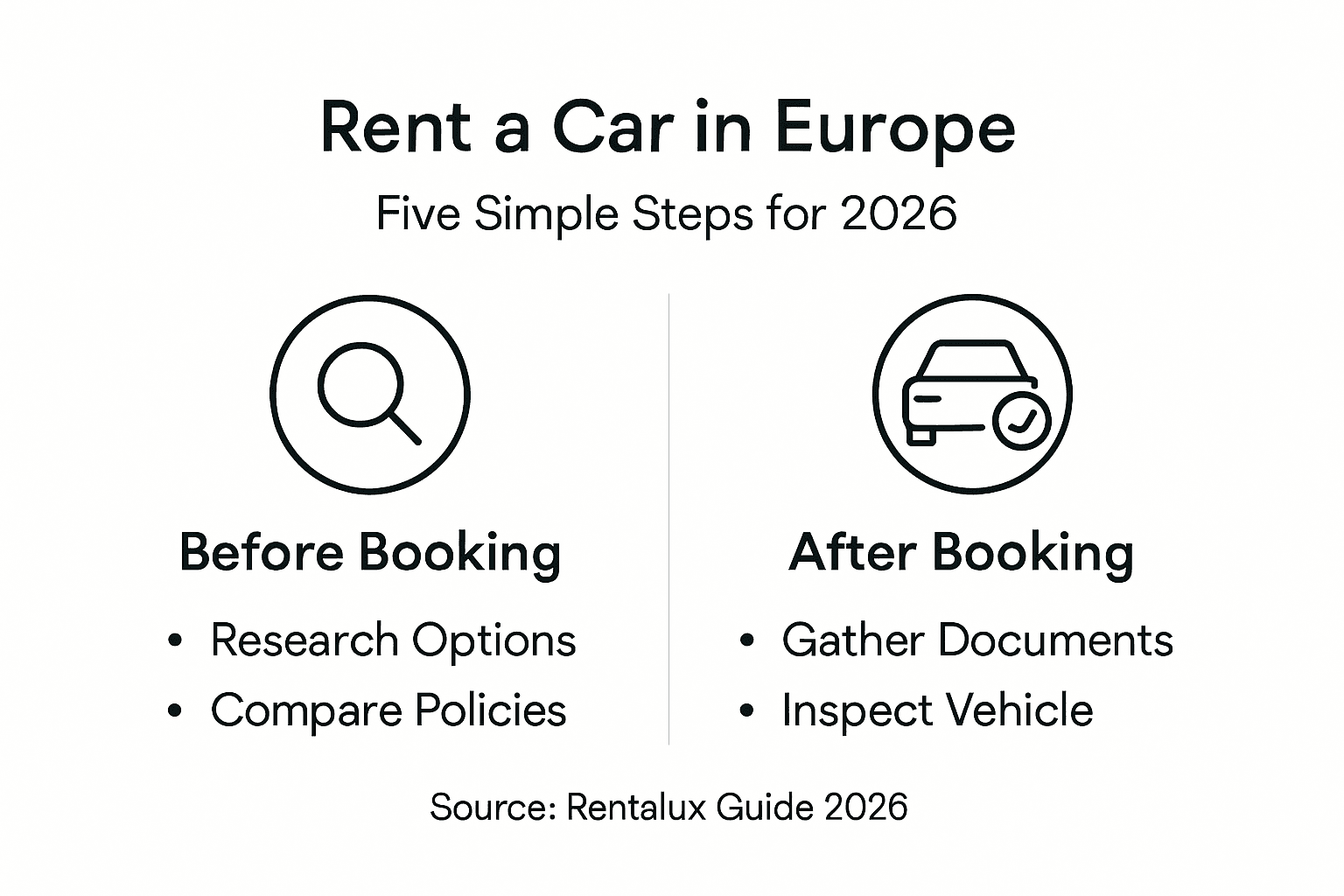
Start with your passport. Verify that it’s valid for at least six months beyond your travel dates. Many European countries won’t allow entry if your passport expires too soon. Check the essential travel documents required for your specific destinations to ensure nothing is missing.
Secure an International Driving Permit (IDP) before you leave home. While your home country’s driver’s license works in most European nations, an IDP provides an official translation and adds credibility. You’ll obtain this from your local automotive authority, and it costs only a few dollars. Rental companies appreciate seeing one.
Make copies of critical documents. Store originals in your hotel safe and carry photocopies separately. This protects you if your wallet goes missing. Documents to copy include your passport, driver’s license, proof of insurance, and your rental booking confirmation.
Verify your documents meet European standards. Use the publicly authenticated travel document database to confirm your identification is accepted across European Union countries. Some older licenses or documents may not be recognized.
Below is a summary of typical documentation and payment requirements you should prepare:
| Requirement | Purpose | Common Tips |
|---|---|---|
| Passport (valid 6+ mos) | European border entry, ID | Check expiry before travel |
| International Driving Permit | Official translation | Obtain locally, inexpensive |
| Major Credit Card | Secure car deposit/payment | Confirm credit limit |
| Proof of Insurance | Show coverage for rentals | Print or download in advance |
Prepare your payment methods strategically:
- Primary credit card for the rental company (most commonly Visa or Mastercard)
- Secondary credit card as backup in case the first is declined
- Proof of insurance from your auto policy or rental coverage
- Debit card only if your primary cards fail (higher fraud risk)
- Small amount of cash for tolls and parking, not for the rental deposit
Notify your credit card companies before traveling. Let them know your travel dates and destinations. This prevents them from blocking legitimate transactions as suspicious activity.
Check your credit card limits. Some luxury car rentals place holds of 500 to 1,500 euros or dollars. Ensure your card has sufficient available credit to accommodate this temporary hold without maxing out your limit.
Rental companies universally require a valid credit card at pickup. Debit cards or cash alone will not work, even if you prepaid your reservation online.
Bring proof that your home auto insurance covers rentals abroad. Some policies do, others don’t. If your insurance doesn’t cover international rentals, purchase the rental company’s coverage during booking.
Pro tip: Contact your rental company three days before pickup and confirm they have your correct phone number and email. This ensures they can reach you with important details about pickup procedures, parking location, or vehicle specifications without delays.
Step 4: Pick up your rental and inspect vehicle quality
Pickup day is when your premium rental experience truly begins. This step protects you from liability disputes and ensures you’re driving a vehicle that meets quality standards.

Arrive at the rental location 15 minutes early. This gives you time to complete paperwork without rushing and allows the staff to prepare your vehicle. Bring all your documents, payment methods, and booking confirmation. Present these calmly and let the agent guide you through the final steps.
Review the rental agreement one final time before signing. Check that pickup and drop-off locations, vehicle type, mileage allowance, and insurance coverage match your booking. Don’t sign if anything differs from what you reserved online. Ask questions about anything unclear.
Before driving away, conduct a thorough inspection. Use a comprehensive vehicle inspection checklist to document the vehicle’s condition systematically. Take time to walk around the car slowly and examine every detail.
Here’s what to inspect carefully:
- Exterior condition including all door panels, bumpers, mirrors, and lights
- Interior cleanliness including seats, carpets, dashboard, and ceiling
- Tire condition checking tread depth and pressure with the spare tire
- Windshield and windows for cracks, chips, or damage
- Fluid levels confirming oil, coolant, and washer fluid are adequate
- All functions including wipers, air conditioning, heating, and lights
- Fuel level verifying the tank is full as promised
Document everything with photos and video. Modern smartphones capture excellent detail. Take images of the odometer, fuel gauge, and any existing damage. This video evidence protects you against claims of damage you didn’t cause. Request that the rental agent sign off on your inspection notes.
Test drive for a few minutes to ensure the vehicle performs correctly. Listen for unusual noises, check steering responsiveness, and verify the brakes work smoothly. If anything feels wrong, return immediately and request a different vehicle.
Confirm mileage on the odometer. Write down the starting mileage on your documents. This protects you if there’s a dispute about excessive mileage charges upon return.
Vehicle quality and safety compliance standards vary across European rental companies. Don’t accept a vehicle that feels unsafe or doesn’t match the vehicle type you booked, even if the agent insists.
Before leaving the lot, familiarize yourself with basic controls. Know where the fuel door release is, how to adjust mirrors, and where emergency contact information is stored. European rental vehicles sometimes have different layouts than you’re accustomed to.
Pro tip: Keep your inspection photos and videos backed up to cloud storage immediately after pickup. If you’re in a rental car accident or damage dispute later, these timestamped images prove the vehicle’s condition when you received it.
Step 5: Confirm terms and finalize your travel arrangements
Before you hit the road, take time to confirm every detail of your rental and travel plans. This final step ensures nothing falls through the cracks and you’re fully prepared for your European adventure.
Review your rental confirmation email immediately after pickup. Verify the vehicle you received matches the booking specifications exactly. Check the pickup and drop-off dates, times, locations, and mileage allowance. If anything differs, contact the rental company within 24 hours to correct discrepancies before they become problems.
Confirm your travel itinerary in writing. Contact your accommodations to reconfirm your arrival dates and times. Let them know you’ll be arriving in a rental car and ask about parking availability. Many European hotels charge parking fees, and knowing this upfront prevents surprise costs.
Notify your travel insurance provider about your rental. Some policies require advance notification of vehicle rentals for coverage to remain valid. Confirm that your insurance covers the specific rental company and vehicle type you booked. This protects you financially if anything goes wrong.
Understand international payment transparency standards now in effect across Europe. Rental companies must clearly disclose all charges before finalizing transactions. Review your itemized receipt and confirm every fee matches what you agreed to during booking.
Key items to confirm:
- Final pricing with all taxes and fees included
- Insurance coverage details and what’s actually covered
- Fuel policy confirming full-to-full or prepay terms
- Mileage allowance in kilometers or miles
- Drop-off procedures including location and time window
- Emergency contact numbers for roadside assistance
- Vehicle return condition expectations and damage assessment process
Ensure you have copies of all important documents. Store originals separately from copies. Take digital backups by photographing your booking confirmation, rental agreement, insurance documentation, and any written confirmations from the rental company.
Confirm your route and accommodation details with family or friends at home. Share your itinerary, rental car details (make, model, license plate), and emergency contact information. This ensures someone knows where you are in case of emergencies.
Check travel regulations and passenger requirements for any changes in European travel rules. Border requirements, toll road policies, and parking regulations vary by country and sometimes change seasonally.
Missing one confirmation detail can cascade into multiple problems during your trip. Spending 30 minutes now confirming everything saves hours of stress on the road.
Contact your rental company 48 hours before pickup to confirm they have your current phone number and email. This ensures they can reach you with any last-minute updates about vehicle pickup procedures or changes.
Pro tip: Create a simple travel folder on your phone containing photos of your confirmation email, rental agreement, insurance documents, vehicle details, and emergency contacts. Keep this folder accessible offline so you have everything you need even if your phone loses connection.
Enhance Your European Car Rental Experience with Rentalux
Navigating the complexities of renting a premium car in Europe can feel overwhelming with so many policies and vehicle options to consider. From age requirements to insurance choices and inspection details, the process demands clarity and confidence. If you want to avoid hidden fees and last-minute surprises while securing a modern, luxurious vehicle tailored to your travel needs, Rentalux is here to help. Discover how our transparent terms and straightforward booking empower you to focus on your journey rather than the paperwork.
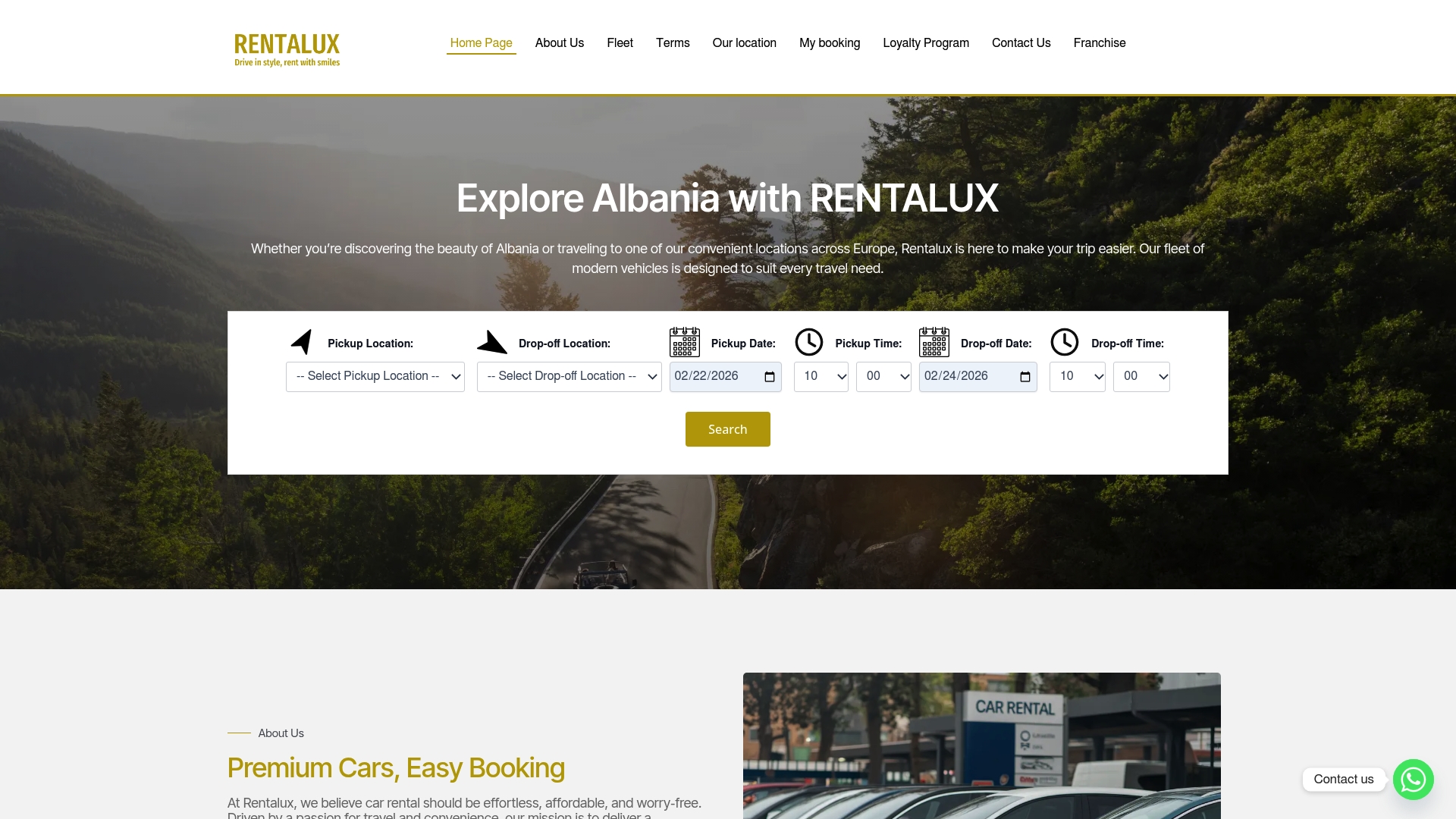
Start your seamless rental experience today by exploring our Uncategorized Archives – Rentalux for expert tips and vehicle options. Ready to book your premium rental with ease and confidence Visit Rentalux online now for a curated fleet, low deposits, and exceptional customer support. Make your next European drive a worry-free adventure by reserving with Rentalux before your trip.
Frequently Asked Questions
What types of premium vehicles can I rent in Europe?
You can rent various premium vehicle types, including premium sedans for business trips, SUVs for family travel, and convertibles for scenic drives. Research the options based on your itinerary to select the best fit for your needs.
How do I find rental companies with clear and transparent policies?
Look for rental companies that clearly state their terms, including age requirements, insurance options, and fuel policies. Review their websites for customer-friendly language and straightforward pricing to ensure you understand all costs upfront.
What documents do I need to prepare before picking up my rental car?
You will need a valid passport, driver’s license, and an International Driving Permit if recommended. Gather these documents and make copies to store separately for added security if your belongings are lost.
How can I ensure my rental vehicle is in good condition?
Inspect the vehicle thoroughly before driving away, checking for both exterior and interior damage, as well as functionality of all features. Use a checklist to document any issues and take photos as evidence before signing off on the vehicle’s condition.
What steps should I take to finalize my travel arrangements before hitting the road?
Confirm your rental details, including pickup and drop-off locations, and verify your accommodation plans. Notify your travel insurance provider about your rental to ensure coverage is valid throughout your journey.
How can I handle any discrepancies in my rental agreement after booking?
Contact the rental company within 24 hours if you notice any discrepancies in your rental agreement. Clarify any issues promptly so that you can avoid complications at the rental counter.