

Think you’re covered by basic car rental insurance? Many travelers assume their rental agreement protects them fully, only to face bills for thousands in damages after an accident. Understanding car hire terminology is the difference between a stress-free European adventure and a financial nightmare. This guide clarifies essential rental terms, empowering you to navigate contracts confidently and avoid costly surprises across Europe.
Table of Contents
- Introduction To Car Hire Terminology
- Key Insurance Terms Explained
- Understanding Fuel Policies
- Deposits And Payment Terms
- Mileage Limits And Charges
- Common Hidden Fees In Car Hire
- Practical Tips For Navigating Rental Agreements
- Choose Rentalux For Clear, Transparent Car Rentals In Europe
Key takeaways
| Point | Details |
|---|---|
| Insurance clarity prevents liability gaps | Understanding CDW and excess insurance protects you from unexpected damage costs reaching thousands of dollars. |
| Fuel policy choices impact total cost | Full-to-full policies save money compared to pre-purchase options that charge premium rates. |
| Deposits temporarily block credit card funds | Security holds of several hundred euros affect your available credit until the car is inspected post-rental. |
| Mileage limits can trigger expensive fees | Exceeding kilometer caps or crossing borders without approval adds significant charges to your bill. |
| Hidden fees add up quickly | One-way charges, additional driver fees, and late return penalties increase costs if not identified upfront. |
Introduction to car hire terminology
Renting a car across Europe should be straightforward, but terminology varies dramatically between countries and rental companies. A term like “excess” in the UK means something entirely different from “deductible” in North America, yet both describe your maximum liability. This linguistic maze creates confusion that costs travelers real money.
Unexpected charges represent the most common complaint among European car renters. You book what appears to be an affordable rate online, only to discover fuel refill penalties, cross-border fees, or insurance gaps at pickup. These surprises stem directly from misunderstood contract terms that seemed clear until you needed them.
Rental platforms, including services offering car rental for leisure travel, promote transparency. Yet contracts remain dense with industry jargon, legal disclaimers, and region-specific conditions. Without a systematic approach to understanding these terms, even experienced travelers miss critical details that affect both safety and budget.
A structured vocabulary of rental terminology transforms contract review from overwhelming to manageable. When you recognize key terms and their financial implications, you can:
- Compare best car rental options european travel accurately across providers
- Identify which additional coverages genuinely protect your interests
- Budget precisely for total rental costs including often-hidden fees
- Ask targeted questions that reveal policy gaps before signing
- Navigate pickup and return procedures confidently
This foundation in terminology directly improves your control over rental costs and reduces stress. Understanding how to rent a car in Europe starts with mastering the language rental companies use in their agreements.
Key insurance terms explained
Insurance terminology causes more confusion and financial loss than any other aspect of car rental. Travelers frequently assume their booking includes comprehensive protection, only to discover massive liability gaps after damage occurs.
Collision Damage Waiver (CDW) limits your financial responsibility if the rental car is damaged, but it doesn’t eliminate liability entirely. Basic insurance coverage may exclude personal liability, leaving renters liable for thousands in damages. You typically remain responsible for an “excess” amount, often ranging from €500 to €2,000 depending on vehicle class and location.
Theft Protection (TP) covers vehicle theft but comes with significant exclusions. If you leave valuables visible in the car, fail to lock doors, or lose keys through negligence, your claim may be denied entirely. Many policies also require a police report filed within 24 hours of discovering the theft.
Excess insurance, also called excess waiver or super CDW, reduces or eliminates your out-of-pocket maximum when filing damage or theft claims. This optional coverage costs €10-25 per day but can save thousands if you’re involved in an accident. Third-party excess insurance purchased separately often costs less than rental company offerings.
Common CDW and TP exclusions that catch renters off guard include:
- Tire damage from punctures or sidewall tears
- Windshield and window cracks or chips
- Undercarriage damage from rough roads
- Interior damage including stains and burns
- Damage occurring while driving off-road or on unpaved surfaces
- Claims filed without proper police documentation
Pro Tip: Photograph the rental car from all angles before leaving the lot, capturing existing scratches, dents, and tire condition with timestamps. These images provide crucial evidence if the company claims you caused pre-existing damage.
Many renters incorrectly believe their credit card’s rental coverage serves as primary insurance in Europe. Most card benefits only provide secondary coverage, paying only after your personal auto insurance and CDW claims are exhausted. Always verify your card’s coverage territory and requirements before declining rental company insurance.
Choosing comprehensive coverage increases daily costs but delivers genuine peace of mind. When exploring how to rent a car in Europe effectively, balancing protection against budget requires understanding exactly what each insurance layer covers and excludes.
Understanding fuel policies
Fuel policies directly determine whether your rental stays budget-friendly or becomes surprisingly expensive. The policy you accept at booking establishes who pays for gas and when, with financial implications that can swing your total cost by 30% or more.
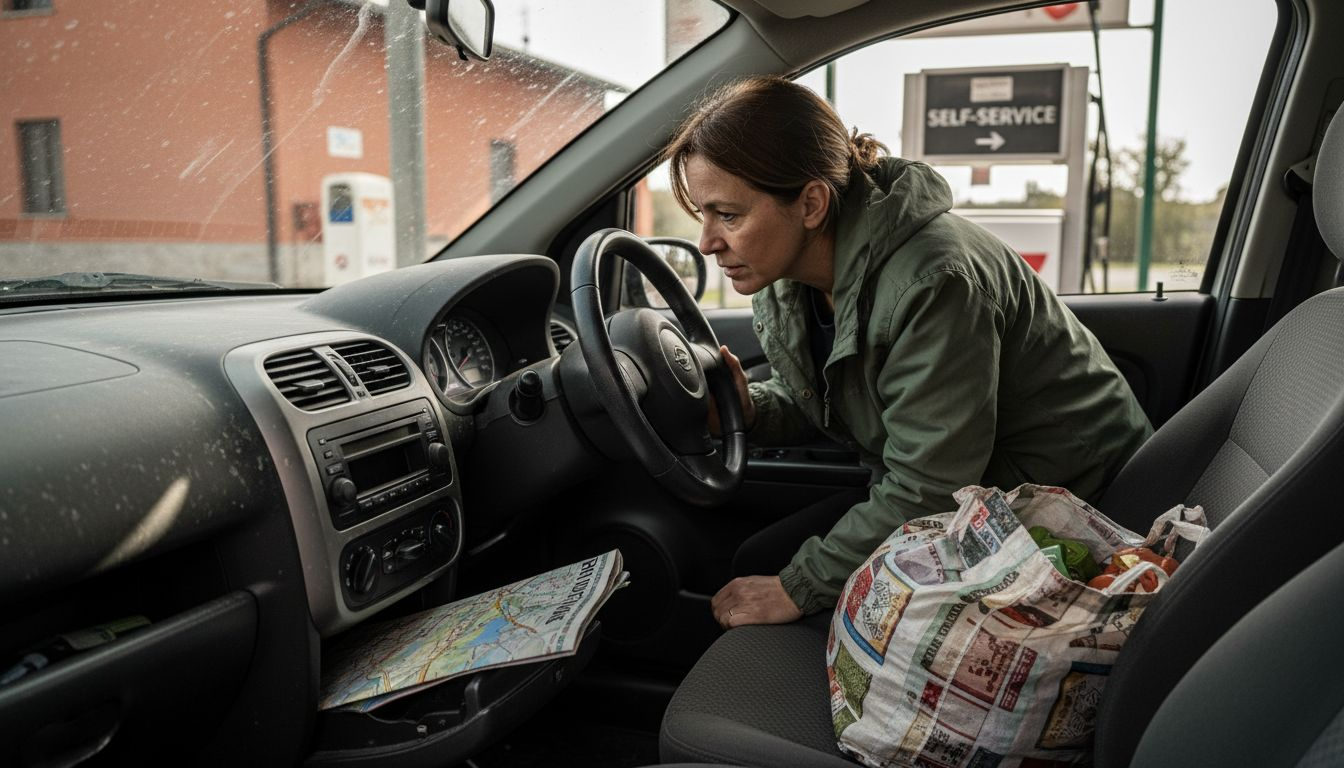
Full-to-full policies require you to return the vehicle with a full tank matching the level at pickup. This option typically offers the best value because you only pay market rates at standard gas stations. You control exactly how much fuel you purchase and can shop for competitive prices near the return location.
Pre-purchase fuel policies charge you upfront for a full tank regardless of how much you actually use. The rental company sets the per-liter price, usually at or above local gas station rates. Unless you return the car completely empty, you’ve paid for fuel you didn’t consume. Realistically, arriving on fumes is nearly impossible without risking breakdown.
| Policy Type | You Pay | Company Refunds | Best For |
|---|---|---|---|
| Full-to-full | Market rate only for used fuel | Nothing (you refill yourself) | Most rentals, maximum control |
| Pre-purchase | Upfront for full tank at rental rate | Nothing, regardless of return level | Very short rentals where refilling is impractical |
| Return empty | Upfront plus service fee | Nothing | Almost never economical |
Failing to comply with your chosen fuel policy triggers expensive refueling penalties. If you return a full-to-full rental without refilling, companies charge €2-4 per liter plus a service fee of €20-40. That’s often three times the local pump price. A half-empty tank on a compact car could cost you an extra €80-100.
Refueling strategy considerations that save money:
- Locate gas stations within 5km of the return point before your trip ends
- Keep your fuel receipt as proof of fill-up timing and location
- Allow 15 extra minutes before return for refueling to avoid late penalties
- Understand that “full” means the needle at the maximum mark, not “mostly full”
- Check if the rental location has on-site refueling at competitive rates
Pro Tip: Take a photo of the fuel gauge showing full at both pickup and just before return. If disputes arise about fuel levels, timestamp documentation protects you from false claims.
Some companies offer third options like “pay for what you use” where they calculate consumption and charge accordingly. While this sounds convenient, the per-liter rate often exceeds market prices by 20-30%. You’re paying for convenience with reduced transparency about actual costs.
Understanding your flexible car rental policy includes knowing fuel terms upfront. The few minutes spent clarifying fuel expectations at pickup prevents stressful last-minute rushes and protects your budget from avoidable surcharges.
Deposits and payment terms
Security deposits represent one of the most misunderstood aspects of car rental, causing budget surprises even for careful planners. These aren’t additional charges but temporary holds that affect your available credit throughout the rental period.
Rental companies place authorization holds on your credit card at pickup, blocking funds equal to the potential excess or deductible amount. This hold isn’t a charge and doesn’t appear as a transaction. Instead, it reduces your available credit limit, sometimes significantly. Typical deposit amounts range from €300 for economy cars to €2,000 or more for luxury or SUV categories.
The deposit serves as security against damage, traffic violations, fuel policy breaches, or other contract violations. If you return the car in perfect condition with no issues, the hold releases automatically. However, “automatically” doesn’t mean instantly.
Deposit release timing varies by rental company and your card issuer:
- Most companies release holds within 3-7 business days after return
- Some banks take up to 14 days to restore the available credit
- Weekend returns may delay processing until the following Monday
- International rentals sometimes face longer clearing periods
- Debit card holds typically take longer than credit card releases
Budgeting complications arise because the deposit reduces your card’s spending capacity during your trip. If you have a €3,000 credit limit and the deposit is €1,500, you only have €1,500 available for other travel expenses. This affects hotel payments, dining, and emergency reserves.
Pro Tip: Use a dedicated credit card with sufficient limit for the rental deposit, keeping your primary travel card free for other expenses. Never use a debit card for deposits because holds can freeze actual cash in your checking account.
Some renters mistake the deposit for an additional rental charge, panicking when they see the hold amount. Reading how to rent a car in Europe guides clarifies that deposits are standard practice, not hidden fees. The key is ensuring you have adequate available credit before pickup.
Disputes occasionally occur when companies claim damage and attempt to charge against the deposit. Thoroughly documenting the vehicle’s condition at pickup and return protects you. If you disagree with damage claims, photograph the disputed area and formally dispute the charge with both the rental company and your card issuer immediately.
Mileage limits and charges
Mileage policies control how far you can drive and what happens if you exceed preset limits. These terms directly affect both your route flexibility and potential extra charges, making them critical to understand before confirming your booking.
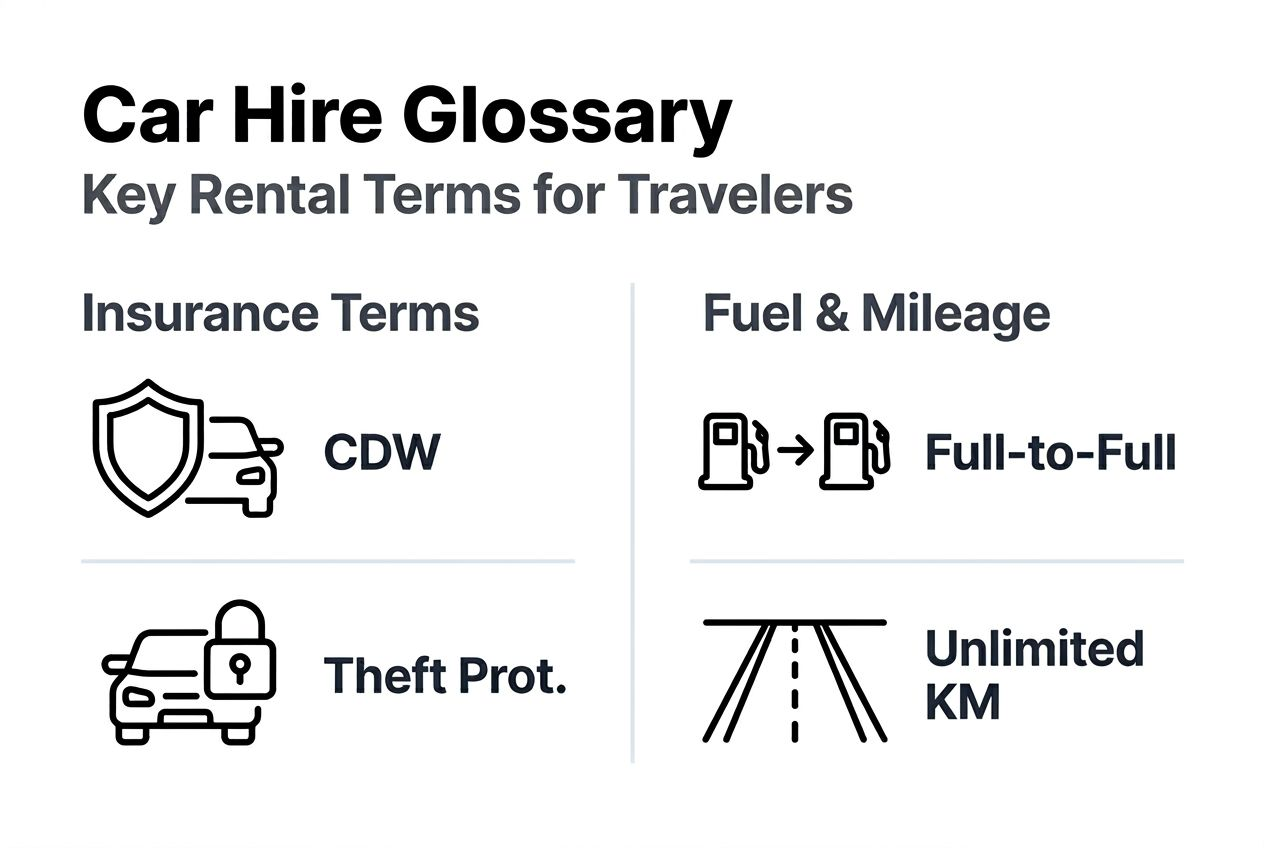
Limited mileage rentals set a specific kilometer cap, commonly 150-300 km per day depending on rental length and vehicle class. Exceed this limit and you’ll pay per-kilometer charges ranging from €0.15 to €0.50 for each extra kilometer. A 500 km overage at €0.30 per km adds €150 to your bill.
Unlimited mileage rentals remove daily caps, allowing extensive driving without per-kilometer penalties. This sounds ideal, but unlimited mileage generally allows unlimited domestic kilometers but often excludes cross-border travel or special vehicle types. Many contracts permit unlimited mileage within the rental country but require explicit approval and possible fees for international borders.
| Mileage Type | Daily Limit | Overage Cost | Cross-Border | Best For |
|---|---|---|---|---|
| Limited (200 km/day) | 200 km | €0.20-0.35/km | Usually restricted | City-based trips, short distances |
| Unlimited domestic | None in-country | None if approved | Requires notification | Road trips within one country |
| Unlimited European | None across EU | None if approved | Usually included | Multi-country tours |
Planning your route before booking helps you select the appropriate mileage policy. Use mapping tools to calculate total driving distance including side trips, detours, and getting lost buffer. Add 15-20% to your estimate because actual driving always exceeds direct route calculations.
Strategies to avoid unexpected mileage charges:
- Request unlimited mileage if your trip exceeds 200 km daily
- Declare all intended cross-border travel at booking and pickup
- Monitor the odometer daily to track consumption against limits
- Ask for written confirmation of mileage terms before leaving the lot
- Understand that GPS-tracked rentals make mileage disputes nearly impossible
Some rental agreements include mileage for specific vehicle classes only. Luxury cars and large SUVs often come with stricter limits even when economy cars include unlimited kilometers. Always verify the mileage terms for your specific vehicle category.
Cross-border mileage policies deserve special attention. Even with unlimited domestic kilometers, driving into neighboring countries without approval can void insurance and trigger penalties. Some routes essential for European exploration, like rental cars in Europe hassle-free travel across multiple nations, require advance planning and explicit permission.
When reviewing mileage terms in your contract, look for phrases like “within country of rental,” “EU approved routes only,” or “cross-border supplement applies.” These indicate restrictions that affect your freedom to explore. Clarifying these limits at booking prevents mid-trip complications and allows you to adjust plans or obtain necessary approvals upfront.
Common hidden fees in car hire
Hidden fees transform apparently affordable rentals into budget-busting experiences. These charges often appear only in contract fine print or emerge at pickup when you’re committed to the rental. Awareness helps you identify, budget for, or negotiate around them.
One-way rental fees apply when you pick up and drop off at different locations. This convenience costs anywhere from €30 for nearby cities to €300+ for international one-ways. The fee compensates rental companies for repositioning vehicles. Routes between major tourist hubs often have lower one-way fees than uncommon routes.
Additional driver fees allow someone besides the primary renter to legally drive the vehicle. Each extra driver typically costs €5-15 per day or €30-75 for the entire rental. Some companies waive this fee for spouses or domestic partners, but most require payment regardless of relationship. Young driver surcharges add another layer, with renters under 25 paying €15-35 daily in many European countries.
Airport location fees rarely appear in initial quotes. Renting from airport car hire costs explained locations includes convenience fees of 10-20% added to the base rate, covering airport concession costs. Downtown locations often cost less overall despite potentially less convenient pickup.
Late return penalties escalate quickly. Most companies offer a 29-59 minute grace period, then charge hourly rates equal to or exceeding daily rates. Return three hours late and you might pay for a full extra day plus late fees. Some contracts charge by the hour without grace periods, making precise return timing critical.
Common surcharges that surprise renters include:
- Navigation system rental: €8-15 per day (your smartphone usually works better)
- Child safety seat rental: €8-12 per day per seat
- Additional insurance sold at pickup desk: €15-40 per day
- Tire/glass/undercarriage damage waiver: €5-12 per day
- Cleaning fees for returning dirty vehicles: €30-100
- Smoking in vehicle penalty: €150-300
- Lost key replacement: €200-500
- Toll road device rental: €3-8 per day plus toll charges
Reviewing rental agreements carefully means reading beyond the headline price. The actual cost includes base rate, mandatory insurance, fuel policy, potential mileage charges, and all applicable fees. Some companies advertise low base rates then add unavoidable fees that double the actual cost.
Budgeting for extras prevents mid-trip financial stress. When comparing options, calculate total costs including likely fees rather than just comparing base rates. Cheap car rentals albania tips often emphasize this total-cost approach to finding genuine value.
Asking specific questions at booking reveals hidden fees before commitment. Inquire about all mandatory fees, typical optional charges, and policies for common situations like late returns or border crossings. Reputable companies disclose these costs transparently, while evasive answers signal potential problems.
Practical tips for navigating rental agreements
Successfully managing rental agreements requires active engagement with contract terms rather than passive acceptance. These practical strategies help you identify potential issues before they become expensive problems.
-
Read the entire rental agreement before signing anything. Focus especially on sections covering insurance coverage, geographic restrictions, fuel policy, and fee schedules. Don’t let pickup desk pressure rush you through this critical review.
-
Verify cross-border travel permissions explicitly. Failure to notify rental companies about cross-border travel can void insurance and cause renters to pay 100% of damages. List every country you plan to visit and obtain written approval for each.
-
Confirm additional driver requirements and costs. Some rentals include one extra driver free while others charge per person. Verify age restrictions since many companies prohibit drivers under 21 or over 75 even as additional drivers.
-
Document fuel and mileage policies in writing before leaving the rental location. Take photos of the fuel gauge and odometer reading with a visible timestamp. Request written confirmation of your specific mileage allowance if any limits apply.
-
Ask about grace periods for returns. Understanding whether you have 30 minutes, one hour, or no flexibility affects your return day schedule. Late penalties can equal or exceed daily rental rates.
-
Clarify what “full” means for fuel returns. Some companies require the needle precisely at the maximum mark while others accept “same as pickup.” This distinction matters when determining if you need to refuel one last time.
Pro Tip: Create a rental checklist on your phone covering insurance terms, geographic limits, fuel policy, mileage allowance, additional driver status, and return requirements. Complete this checklist at pickup with staff confirmation, creating documentation if disputes arise later.
Question anything unclear in your contract immediately. Terms like “reasonable wear and tear,” “proper use,” or “authorized driver” need specific definitions. What counts as tire damage versus normal wear? Does proper use exclude gravel roads? Who qualifies as an authorized driver?
Understanding how to rent a car in Europe includes recognizing that contracts are negotiable at reputable companies. If terms seem unreasonable or unclear, discuss alternatives. Companies want your business and often adjust policies when concerns are raised professionally.
Inspect the vehicle thoroughly before accepting it. Walk around completely, checking body panels, windows, tires, interior condition, and all lights. Test windshield wipers, horn, lights, and basic functions. Report any issues immediately and insist they’re documented on the checkout form. This protects you from being charged for pre-existing damage.
Keep all rental documentation together and easily accessible throughout your trip. This includes the contract, insurance certificates, emergency contact numbers, pickup/return location details, and your photographic evidence. Digital copies stored in cloud services provide backup if physical documents are lost.
Choose Rentalux for clear, transparent car rentals in Europe
Now that you understand the terminology that protects your budget and peace of mind, choosing a rental provider with genuinely transparent terms becomes essential. Rentalux built its reputation on clarity, offering straightforward contracts without the hidden fees that plague many competitors.
Our flexible car rental policy means you’ll never wonder what’s included or what costs extra. Every fee, insurance option, and policy detail is explained clearly before booking. We provide detailed breakdowns showing your total cost including all applicable charges, so your budget stays intact.
Explore our modern rental car fleet featuring reliable vehicles perfect for European adventures, from compact city cars to spacious SUVs for family trips. Each listing includes transparent pricing, mileage policies, and cross-border permissions. Visit the Rentalux home page to discover why thousands of travelers trust us for stress-free European car rentals with terms you can actually understand.
FAQ
What does collision damage waiver cover in Europe?
Collision Damage Waiver (CDW) reduces your liability for vehicle damage but doesn’t eliminate it completely. You typically remain responsible for an excess amount ranging from €500 to €2,000. CDW often excludes tires, windows, undercarriage damage, and interior harm, leaving you liable for these specific types of damage.
How do fuel policies affect my rental cost?
Full-to-full policies require you to refill before return, offering the best value at market gas prices but risking expensive refueling penalties if forgotten. Pre-purchase fuel costs more upfront at rates set by the rental company, and you lose money on unused fuel. Choosing the wrong policy can increase your total rental cost by 30% or more.
What should I do if I plan to drive across European borders?
Always inform the rental company during booking and obtain explicit written approval for each country you’ll visit. Purchase any required additional cross-border insurance to maintain coverage validity. Failing to notify the rental company about cross-border travel can void your insurance, leaving you personally liable for all damages. Check specific country restrictions since some vehicles aren’t permitted in certain nations.
Are there common hidden fees I should watch for when renting?
Watch carefully for one-way drop-off charges that can reach €300, additional driver fees of €5-15 daily, young driver surcharges of €15-35 daily, and late return penalties equal to daily rates. Airport location fees add 10-20% to base rates. Navigation systems, child seats, and additional insurance sold at pickup desks also increase costs significantly. Factor all these into your budget before booking.