
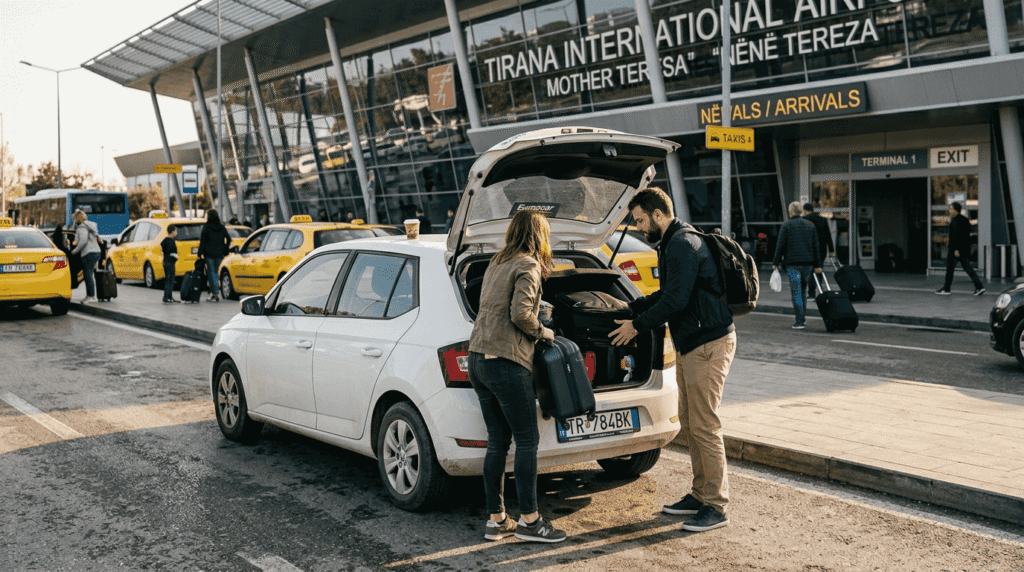
Booking an airport car rental in Albania can feel overwhelming if you’re unfamiliar with local requirements and road conditions. Many travelers arrive at Tirana Airport unsure about documentation, vehicle selection, or how to navigate Albania’s diverse terrain safely. This guide walks you through every step of the rental process, from preparing essential documents to choosing the right vehicle for your journey. You’ll learn practical strategies to avoid hidden fees, understand local driving regulations, and secure the best deals for your Albanian adventure.
Table of Contents
- What You Need Before Booking A Car Rental At Tirana Airport
- Choosing The Right Rental Car For Albania’s Road Conditions
- How To Book Your Airport Car Rental: Step-By-Step Process
- Driving Tips And Local Regulations For A Safe Albanian Road Trip
- Discover Stress-Free Car Rentals With Rentalux
- What Documents Do I Need To Rent A Car At Tirana Airport?
- Are There Hidden Fees I Should Watch Out For When Renting A Car In Albania?
- What Should I Know About Driving Conditions And Road Safety In Albania?
Key takeaways
| Point | Details |
|---|---|
| Document preparation | Non-EU visitors need an International Driving Permit, valid license, passport, and credit card for deposit. |
| Vehicle selection matters | Road quality varies significantly, with 4×4 vehicles recommended for northern mountainous regions and standard cars suitable for southern coastal routes. |
| Book early for savings | Advance booking secures rates as low as €10/day in low season versus €60-80/day during peak summer months. |
| Hidden fees awareness | Careful contract review prevents unexpected charges that affect 20-30% of renters, often adding €50-€300 to final costs. |
| Tirana Airport access | Main entry point with 30-45 minute drive to city center, offering multiple rental counters and convenient pickup locations. |
What you need before booking a car rental at Tirana Airport
Preparing the right documentation before you arrive saves time and prevents rental complications. Required documents include a valid license, with EU licenses accepted directly while non-EU visitors often need an International Driving Permit alongside their home country license. Your passport serves as primary identification, and rental companies require a credit card in the driver’s name for security deposits.
Age requirements typically start at 21 years, though drivers under 25 may face additional fees or vehicle restrictions. If you plan to share driving duties, register additional drivers at booking to ensure proper insurance coverage. Missing any required documentation can result in rental refusal or substantial fines, so double-check everything before your trip.
Deposit amounts vary by vehicle class and rental duration, typically ranging from €200 to €800. Most companies accept major credit cards like Visa and Mastercard, while debit cards may face restrictions. Payment processing happens at pickup, so ensure your card has sufficient available credit beyond the rental cost.
| Document Type | Requirement | Notes |
|---|---|---|
| Driver’s License | Valid for minimum 1 year | EU licenses accepted directly |
| International Permit | Required for non-EU visitors | Obtain before travel |
| Passport | Government-issued ID | Must match driver name |
| Credit Card | In driver’s name | €200-€800 deposit hold |
| Additional Driver Docs | Same as primary driver | Register at booking |
Pro Tip: Photograph your rental car from all angles before leaving the lot, capturing existing scratches, dents, and interior condition. These images provide crucial evidence if disputes arise about damage charges during vehicle return.
Understanding car rental documents in Albania ensures smooth processing at the counter. Review your renting a car at Tirana Airport guide for location-specific pickup procedures and terminal navigation tips.
Choosing the right rental car for Albania’s road conditions
Albania’s geography creates dramatic variations in road quality that directly impact vehicle selection. Southern roads are well-maintained along coastal areas and major tourist routes, while northern mountainous regions feature rougher terrain requiring higher clearance and robust suspension. Your itinerary determines whether a compact hatchback suffices or if you need a capable 4×4.
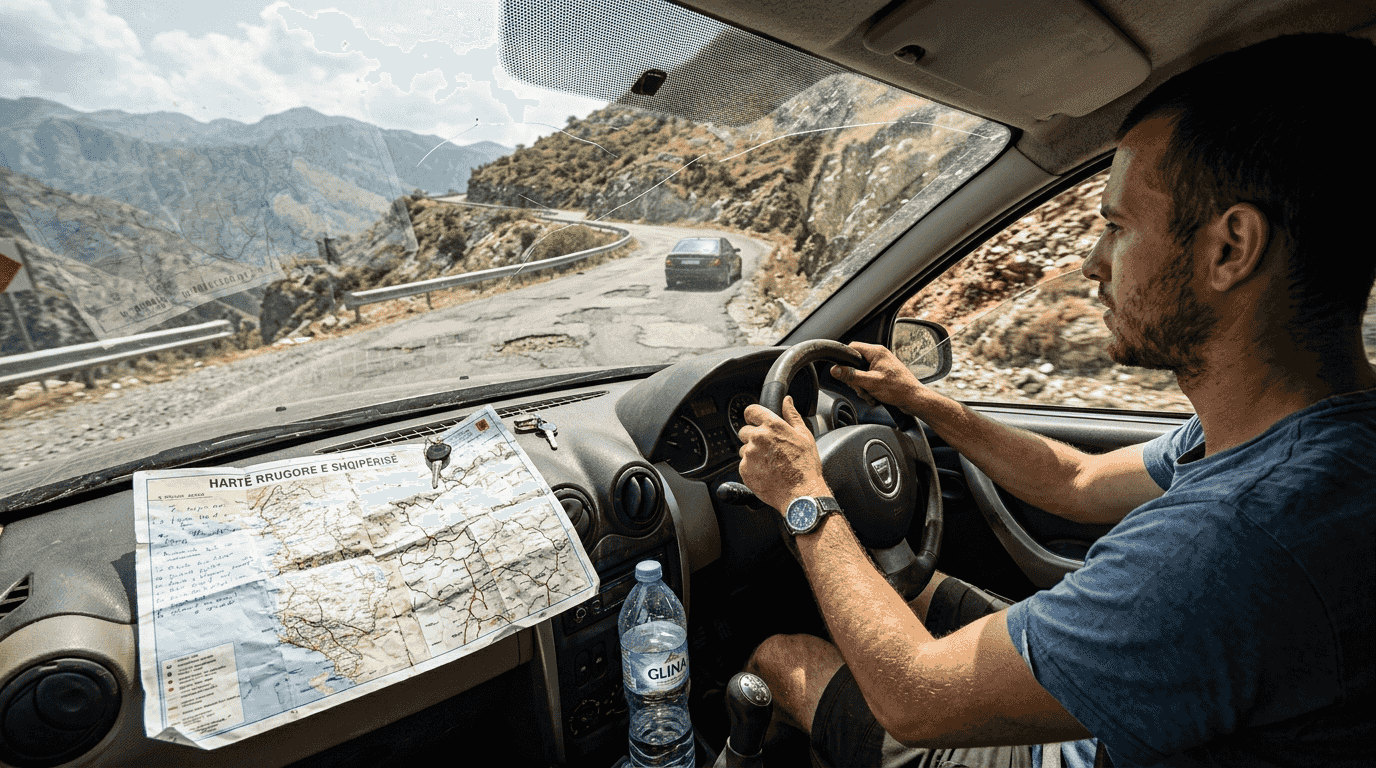
Coastal drives to destinations like Saranda, Vlora, and the Albanian Riviera work perfectly with standard sedans or hatchbacks. These vehicles offer better fuel economy and easier parking in crowded beach towns. However, venturing into the Albanian Alps, Theth National Park, or remote northern villages demands a 4×4 with proper ground clearance and all-wheel drive capability.
Albanian rental companies offer friendly services with generally lower deposit requirements compared to Western European standards. This affordability extends across vehicle categories, making it practical to upgrade to a more capable vehicle if your plans include diverse terrain.
| Vehicle Type | Best For | Advantages | Limitations |
|---|---|---|---|
| Hatchback | City driving, coastal routes | Excellent fuel economy, easy parking, lowest rates | Poor ground clearance, limited cargo space |
| Sedan | Highway travel, business trips | Comfortable for long distances, adequate trunk space | Not suitable for rough roads |
| SUV/4×4 | Mountain regions, rural areas | High clearance, all-terrain capability, spacious | Higher fuel costs, pricier rentals |
Consider these factors when selecting your vehicle:
- Match vehicle capability to your planned destinations and road types
- Account for passenger count and luggage requirements
- Factor fuel costs into budget, especially for longer trips
- Verify insurance coverage matches vehicle category
- Confirm the rental includes necessary equipment like spare tire and jack
Pro Tip: Book a vehicle that matches your actual itinerary rather than upgrading unnecessarily. If you’re staying on paved coastal roads, save money with a compact car. Reserve the 4×4 only when your route genuinely requires off-road capability.
Explore car types for Albania roads to compare specific models and their suitability. Plan scenic driving destinations on paved roads if you prefer easier terrain with standard vehicles.
How to book your airport car rental: step-by-step process
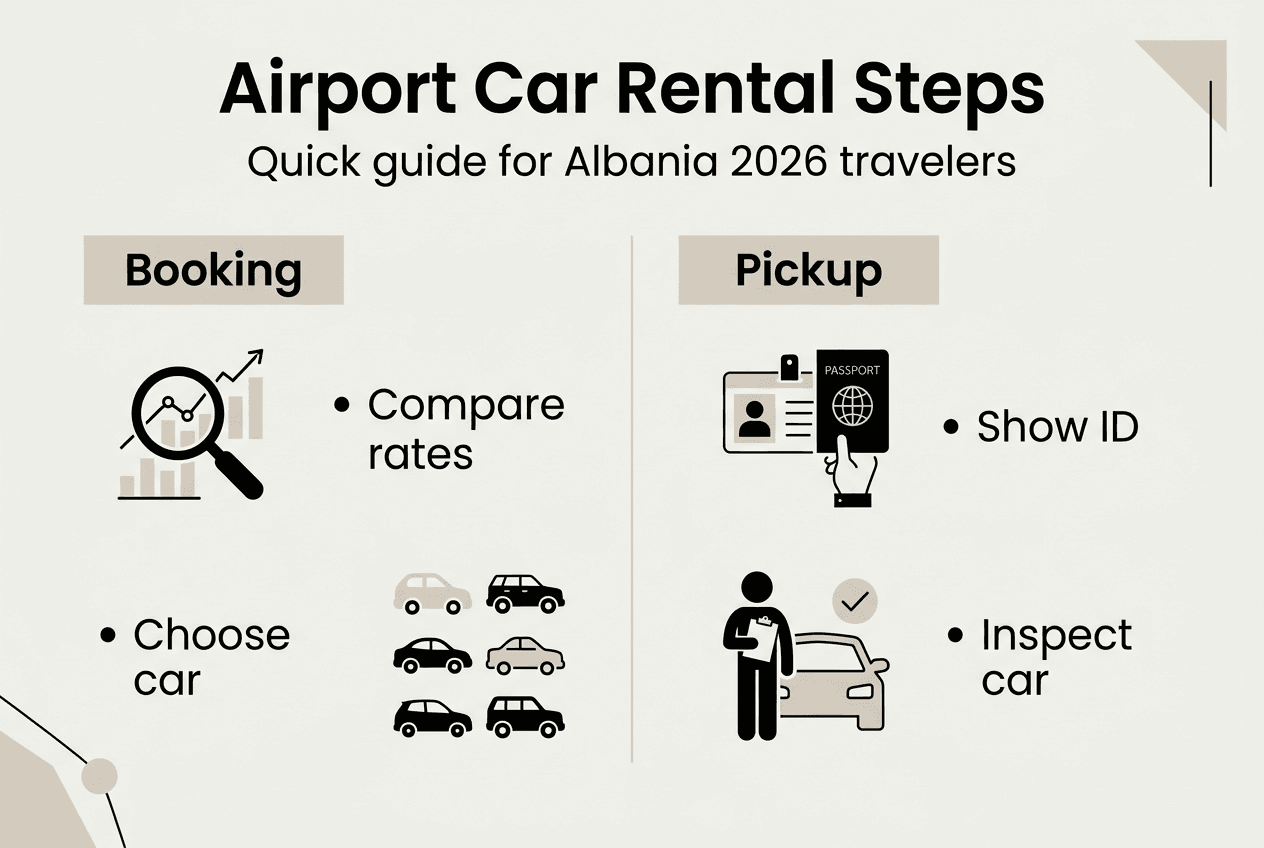
Securing your rental car requires strategic planning to get optimal pricing and vehicle availability. Booking well in advance, especially during peak summer season, locks in better deals and ensures your preferred vehicle class remains available. Prices fluctuate dramatically based on demand, with low season rates starting around €10 per day compared to €60-80 daily during July and August.
Follow this systematic approach to complete your booking:
- Compare prices across multiple providers using aggregator websites and direct rental company sites to identify competitive rates.
- Check vehicle availability for your exact travel dates, confirming pickup and return times align with your flight schedule.
- Review rental terms carefully, noting mileage limits, fuel policy, insurance coverage, and cancellation conditions.
- Prepare required documents including valid license, International Driving Permit if needed, passport, and credit card details.
- Confirm your booking via email, saving all correspondence and reservation numbers for airport pickup.
- Reconfirm 24-48 hours before arrival to verify your reservation remains active and note any last-minute changes.
Hidden fees catch many renters off guard, affecting 20-30% of customers with unexpected charges ranging from €50 to €300. Common culprits include mandatory insurance upgrades, additional driver fees, young driver surcharges, GPS rental, fuel service charges, and cleaning fees. Combat these by reading your rental agreement thoroughly before signing and questioning any unclear charges at the counter.
Seasonal pricing patterns show dramatic swings. Winter months offer the lowest rates as tourism drops, while summer peak season commands premium pricing due to high demand. Shoulder seasons of April-May and September-October provide balanced pricing with pleasant weather and fewer crowds.
Pro Tip: Use reputable rental providers with transparent pricing and positive customer reviews. Book directly through their websites when possible to avoid third-party markup fees, and always opt for full insurance coverage to eliminate deductible worries.
Learn strategies for saving on Albania car rentals to maximize your budget. Understanding hidden fees and booking advice helps you avoid common pitfalls that inflate final costs.
Driving tips and local regulations for a safe Albanian road trip
Navigating Albanian roads requires awareness of local driving culture and official regulations. Tirana traffic can be chaotic with unclear lane markings, aggressive drivers, and complex roundabouts that challenge even experienced motorists. Exercise defensive driving techniques and allow extra time for city navigation until you adapt to local patterns.
Albanian driving regulations enforce mandatory seat belt use for all passengers, prohibit handheld phone use while driving, and maintain strict DUI laws with severe penalties. Speed limits vary by road type: 40 km/h in residential areas, 80-90 km/h on rural roads, and 110 km/h on highways. Police conduct regular traffic stops, so compliance with posted limits matters.
Key driving laws to remember:
- Seat belts required for driver and all passengers at all times
- No handheld mobile phone use, hands-free devices permitted
- Blood alcohol limit strictly enforced at 0.01%, essentially zero tolerance
- Headlights mandatory in tunnels and during poor visibility conditions
- Children under 12 must use appropriate car seats or boosters
- Winter tires required November through March in mountainous regions
Road signage follows European conventions with international symbols, though some rural areas lack clear marking. Major routes feature adequate signage in Albanian and English, while remote areas may only display Albanian text. GPS navigation proves invaluable for route planning and real-time directions.
Fuel station availability concentrates in cities and along main highways, with stations becoming sparse in rural mountainous areas. Plan fuel stops accordingly, especially when exploring northern regions where stations may be 50-100 kilometers apart. Most stations accept cash and cards, though carrying some Albanian lek ensures payment flexibility.
Defensive driving is essential in Albania. Expect unexpected maneuvers from other drivers, livestock on rural roads, and pedestrians crossing without warning. Stay alert, maintain safe following distances, and never assume other drivers will follow traffic rules consistently.
Parking in cities requires attention to marked zones and payment meters. Blue zones indicate paid parking, while white lines designate free spots. Avoid parking in unmarked areas or blocking narrow streets, as towing and fines happen regularly in tourist areas.
Familiarize yourself with Albania driving rules and tips before your trip. Read detailed driving in Tirana advice to prepare for capital city navigation challenges.
Discover stress-free car rentals with Rentalux
Rentalux simplifies your Albanian car rental experience with transparent booking and competitive pricing designed for travelers who value clarity and convenience. We eliminate the guesswork from airport rentals by offering straightforward terms, low deposits, and no hidden fees that surprise you at checkout.
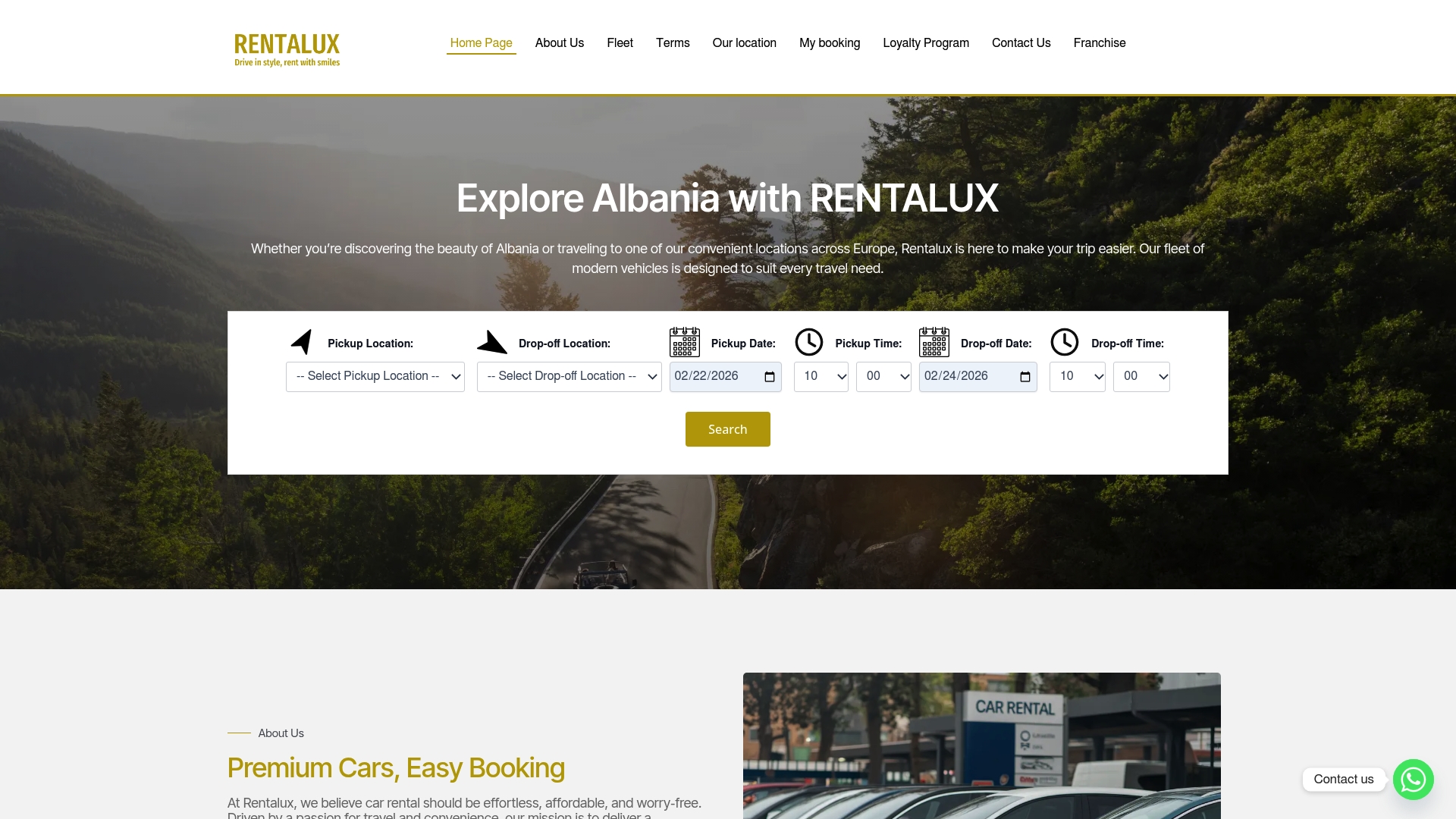
Our advantages include:
- Low deposit requirements starting from €200 for most vehicle classes
- Completely transparent pricing with no hidden charges or surprise fees
- Local expertise helping you choose the perfect vehicle for Albanian roads
- Wide selection from compact city cars to rugged 4x4s for mountain exploration
- Flexible rental periods accommodating both short trips and extended tours
Visit our affordable car rentals in Albania page to explore current rates and vehicle availability. Our flexible car rental policies adapt to your travel needs, whether you’re a tourist exploring coastal beauty or a business traveler needing reliable transportation. Browse the Rentalux car fleet in Albania to find your ideal vehicle, then book early to secure the best rates and guarantee availability for your 2026 Albanian adventure.
What documents do I need to rent a car at Tirana Airport?
A valid driver’s license held for at least one year is essential, with EU licenses accepted directly. Non-EU visitors typically need an International Driving Permit obtained before traveling, presented alongside their home country license. Your passport provides official identification, while a credit card in the driver’s name covers the security deposit hold.
Can I use a debit card instead of a credit card?
Most rental companies require credit cards for deposit holds, though some accept debit cards with restrictions. Debit card rentals often require additional documentation, higher deposits, or proof of return flight. Confirm your specific company’s payment policies during booking to avoid pickup complications.
What if I want to add another driver?
Additional drivers must register at booking or pickup, presenting the same documentation as the primary renter. Most companies charge daily fees for extra drivers, though some waive charges for spouses or partners. All drivers must meet minimum age requirements and hold valid licenses meeting rental criteria. Review car rental documents Albania for complete registration requirements.
Are there hidden fees I should watch out for when renting a car in Albania?
Hidden fees affect 20-30% of renters, adding unexpected charges between €50 and €300 to final bills. Common surprise costs include mandatory insurance upgrades, young driver surcharges, additional driver fees, GPS rental, one-way drop-off charges, and fuel service fees. Thorough contract review before signing identifies these charges upfront.
How can I avoid unexpected charges?
Ask explicitly about all potential fees during booking and at the rental counter before signing agreements. Verify what your quoted price includes, question any unclear line items, and photograph the fuel gauge and vehicle condition comprehensively. Return the car with the agreed fuel level and at the scheduled time to avoid refueling or late return penalties.
What should I do if I notice damage during pickup?
Document every scratch, dent, and interior issue before leaving the rental lot, requesting the agent note them on your contract. Take dated photos and videos showing all vehicle sides, wheels, windows, and interior. This evidence protects you from false damage claims during return. Learn more about avoiding hidden rental fees through smart preparation.
What should I know about driving conditions and road safety in Albania?
Road quality varies dramatically across Albania, with well-maintained highways and coastal routes contrasting sharply with rough mountain roads. 4×4 vehicles suit northern areas like Theth and Valbona where unpaved roads and steep grades challenge standard cars. Southern coastal drives to Saranda and Vlora work perfectly with regular sedans.
Is driving in Tirana difficult for visitors?
Tirana presents chaotic traffic with unclear lane markings, aggressive driving, and complex roundabouts that intimidate newcomers. Allow extra time for city navigation, practice defensive driving, and consider avoiding rush hours until you adapt to local patterns. Parking requires attention to marked zones and payment requirements in tourist areas.
What traffic laws must I follow?
Albanian law mandates seat belts for all occupants, prohibits handheld phone use, and enforces strict DUI limits at 0.01% blood alcohol. Speed limits range from 40 km/h in residential zones to 110 km/h on highways, with police conducting regular enforcement stops. Winter tires become mandatory in mountainous regions from November through March. Review comprehensive Albania road safety tips for detailed regulation guidance and practical driving advice.