
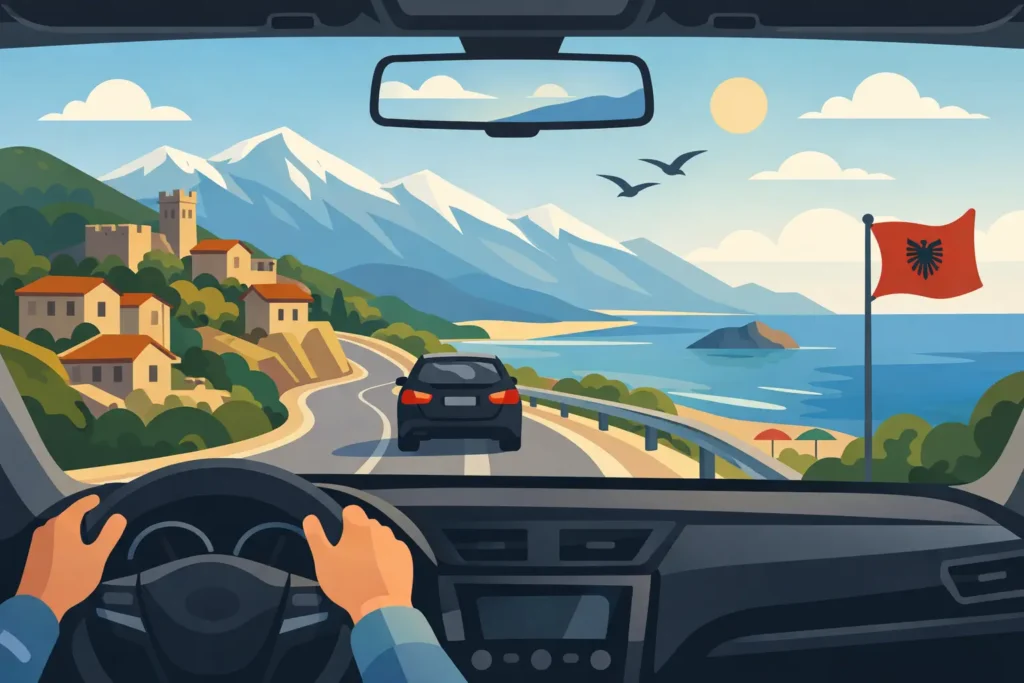
The first surprise for many travelers is how quickly Albania shifts around you. One hour you are leaving Tirana traffic, the next you are climbing a mountain road with wide views, and by afternoon you are parked near a beach in the south. That is exactly why a good driving in Albania guide matters. The country rewards flexibility, but it also helps to know what the roads, rules, and driving style actually feel like before you pick up the keys.
For most visitors, driving is the easiest way to experience Albania properly. Public transport can work between major cities, but it is not ideal if you want to stop in small coastal towns, reach quieter beaches, or move on your own schedule. A rental car gives you comfort, time savings, and the freedom to build the trip around what you want to see – not around bus timetables.
Why driving in Albania is worth it
Albania is more drivable than many first-time visitors expect. Major routes between Tirana, Durres, Vlore, Shkodra, and Saranda are straightforward, and road quality on the main corridors has improved significantly over the years. If your plan includes airport arrival, hotel check-in, beach towns, and day trips, having your own vehicle makes the entire journey smoother.
That said, the experience depends on where you go. City driving is more hectic, especially in Tirana. Rural roads can be narrower, less predictable, and sometimes shared with livestock, farm vehicles, or pedestrians. Coastal and mountain routes can be beautiful, but they demand a little more attention. Albania is not difficult to drive in, but it does reward calm, alert drivers.
Driving in Albania guide: what US travelers should know first
If you are visiting from the US, most of the basics will feel familiar. Cars drive on the right-hand side. Road signs are generally easy to follow. Fuel stations are common on main routes. Navigation apps are useful and usually accurate on major roads.
The real adjustment is not the legal framework – it is the local rhythm. Traffic can look more flexible than what many American drivers are used to. Lane discipline is not always perfect, merging can be assertive, and drivers may make quick decisions in busy areas. If you stay patient and avoid reacting aggressively, the experience becomes much easier.
A defensive driving mindset goes a long way here. Leave space, expect the unexpected in city traffic, and do not assume every other driver will signal early. Once you adapt to that pace, driving becomes much more comfortable.
License, documents, and rental basics
Most international travelers can rent a car in Albania using a valid driver’s license from their home country, though requirements vary slightly by provider and nationality. Carry your passport, driver’s license, rental agreement, and insurance documents whenever you are on the road. If you are unsure whether an International Driving Permit is recommended for your trip, check in advance rather than guessing at the counter.
This is also where choosing the right rental provider matters. Transparent terms, clear insurance details, and a simple pickup process can make the difference between a smooth start and a frustrating one. Premium travel does not have to be complicated, and that applies to car rental just as much as the drive itself.
Road conditions and what to expect by region
Road quality in Albania varies by route, not just by region. Main roads connecting major destinations are usually in decent shape and manageable in a standard vehicle. If your route is Tirana to Durres, Tirana to Shkodra, or south toward Vlore, the drive is generally straightforward.
Secondary roads are where conditions can change. In some areas you may find rough pavement, sharp turns, limited shoulder space, or temporary construction. If you are heading into mountain villages or less-developed coastal stretches, drive more slowly than the map’s estimated time suggests.
The Albanian Riviera is a good example of beauty with trade-offs. The scenery is exceptional, and having your own car makes it much easier to explore places like Himare, Borsh, and Ksamil. At the same time, some roads are winding and busy in summer, so the drive can take longer than the distance suggests.
City driving in Tirana and other busy areas
Tirana is usually the part visitors ask about most, and for good reason. Traffic can be dense, intersections can feel informal, and parking takes patience. If you are arriving tired after a flight, it may help to plan a simple first route from the airport to your hotel rather than trying to cross the city during peak congestion.
The best approach in Tirana is to keep things simple. Use navigation, watch for buses and scooters, and do not rush lane changes. If a turn looks confusing, go around and try again instead of forcing it. A relaxed driver almost always has the better experience.
Durres, Vlore, and Saranda are easier than Tirana overall, but summer traffic near beaches and promenades can still slow things down. In coastal towns, the challenge is often parking more than driving.
Speed limits, signs, and local rules
Speed limits can vary by road type and location, so always follow posted signs. In general, limits are lower in urban areas and villages, then higher on highways and intercity roads. The signs are standard European style, so most travelers find them easy to interpret.
Seat belts are required. Using a phone while driving is not worth the risk. Drinking and driving should be treated with zero flexibility. You may also encounter roundabouts more often than in some parts of the US, so yield carefully and watch how local traffic is flowing before entering.
One useful habit is to slow down whenever you enter a town or village, even if the road ahead looks open. Pedestrians, parked cars, and sudden crossings are common.
Parking, fuel, and tolls
Parking depends heavily on the destination and the season. Hotels may offer private parking, which is worth prioritizing, especially in busier cities and beach areas. Street parking exists, but availability and local parking customs can vary. If a parking area looks informal or confusing, ask before leaving the car.
Fuel stations are widely available on popular travel routes, and service is usually straightforward. It is still smart not to let the tank get too low if you are heading into remote areas or spending the day on scenic back roads.
Tolls are limited compared with many European countries, but you should still carry some local currency or a payment card just in case your route includes one. This is a small detail, but it saves hassle when you are focused on the drive.
Choosing the right car for your trip
The best vehicle depends on your itinerary, not just your budget. For city stays and major road travel, a compact automatic is often the easiest choice. It is simpler to park, efficient on fuel, and comfortable for couples or solo travelers.
If you are traveling as a family, carrying more luggage, or planning longer regional drives, a larger sedan or SUV may be the better fit. The extra space adds comfort, especially in summer heat or on multi-stop itineraries. If your route includes rural roads or elevated terrain, a vehicle with better ground clearance can add confidence, though most travelers do not need a true off-road setup.
This is where a service-focused rental experience helps. Picking a car that matches the trip means less stress once you are already on the road.
Practical tips for a smoother drive
A few habits make driving in Albania noticeably easier. Start longer drives earlier in the day, especially in summer, when roads to coastal destinations get busier. Download offline navigation before leaving the airport or hotel. Keep water in the car, and do not plan an overly tight schedule between stops.
It also helps to drive with margin. If a route says two and a half hours, treat that as a best-case estimate, not a promise. Traffic, roadworks, parking searches, and scenic stops can all add time, and Albania is one of those places where you will often want to stop for the view.
If you are nervous about your first day, choose an easy route first. Airport to hotel, hotel to beach town, or city to nearby destination is a better warm-up than trying to do a long mountain drive immediately after arrival.
Is driving in Albania safe?
For most travelers, yes – provided you drive carefully and stay realistic about local conditions. Albania is not a place where you want to be overconfident, distracted, or in a rush. But if you are an attentive driver with basic international travel experience, it is absolutely manageable.
The key is to respect the difference between legal rules and real-world driving culture. Roads can be excellent one moment and less polished the next. Some drivers are fast, some are unpredictable, and some roads ask for more patience than skill. If you keep your speed sensible and your expectations flexible, the trip usually feels far easier than people fear.
A well-chosen rental car, clear terms, and an easy pickup process also make a real difference. Providers such as Rentalux appeal to travelers for exactly that reason – less friction at the counter, more confidence on the road, and more time to enjoy the trip.
Albania is one of those destinations that gives more when you can move freely. Drive with care, keep the plan simple, and leave room for the unplanned stop that ends up being your favorite part of the journey.