

Choosing how to explore Europe presents travelers with a critical decision that shapes their entire trip experience. While public transportation networks connect major cities efficiently, they often limit spontaneity and access to hidden gems that make European travel memorable. Renting a car offers flexibility, cost savings, and convenience that transform how you experience the continent, whether you’re planning a family vacation, business trip, or romantic getaway. Understanding these advantages helps you make informed choices that maximize your travel investment while opening doors to authentic experiences beyond tourist hubs.
Table of Contents
- Flexibility And Access: Explore Beyond Public Transport
- Cost Advantages: When Renting Beats Buying
- Convenience And Comfort For Families And Business Travelers
- Avoiding Hidden Costs And Pitfalls: What Every Traveler Should Know
- Why Choose Rentalux For Your Europe Car Rental Needs
Key takeaways
| Point | Details |
|---|---|
| Flexibility and exploration | Renting increases off-the-beaten-path visits by 40% compared to public transport reliance |
| Cost effectiveness | Avoid depreciation, maintenance, and ownership expenses that make buying impractical for short trips |
| Group and family savings | Three or more travelers save 15-20% versus purchasing individual transport tickets |
| Business efficiency | Rental car users attend 20% more weekly meetings than those using public transit |
| Privacy and comfort | Control your schedule with dedicated luggage space and personal travel environment |
Flexibility and access: Explore beyond public transport
Public transportation in Europe excels at connecting major cities, but it falls short when you want to discover rural villages, coastal hideaways, or mountain retreats that define authentic European culture. Renting a car liberates you from rigid timetables and predetermined routes, enabling spontaneous detours that often become trip highlights. You control departure times, rest stops, and how long you spend at each destination without consulting train schedules or bus frequencies.
The European Travel Commission found that renting increases off-the-beaten-path exploration by 40% compared to public transport users. This statistic reflects the reality that many charming destinations lack convenient rail or bus connections. Medieval hilltop towns, vineyard regions, and scenic coastal roads become accessible when you have wheels, transforming your itinerary from predictable to extraordinary.
Travelers who rent visit 2.5 more destinations per trip than those relying solely on public options. This increased reach stems from eliminating transfer times and connection waits that consume hours during multi-city journeys. You can combine a morning at a countryside monastery with an afternoon exploring a coastal fishing village, experiences that would require overnight stays and complex logistics using trains or buses.
The advantages of renting a car for exploring Europe extend beyond destination count to trip quality. Spontaneous discoveries happen when you spot an intriguing sign and simply pull over, whether that’s a local market, scenic overlook, or family-run restaurant. This freedom creates memories that structured tours and fixed transportation cannot replicate.
Pro Tip: Plan your route using mapping tools that highlight scenic byways and cultural sites, but leave room in your schedule for unplanned stops that catch your interest along the way.
Cost advantages: When renting beats buying
Purchasing a vehicle for European travel seems appealing until you calculate the true costs involved. New cars lose over 20% of their value during the first year, creating immediate depreciation that renters avoid entirely. This financial hit becomes especially painful when you factor in the hassle of selling a vehicle after your trip ends, often at a significant loss compared to purchase price.
Ownership brings ongoing expenses that rental agreements eliminate. Maintenance, repairs, registration fees, and annual inspections add up quickly in European markets where labor costs run high. Insurance premiums for foreign owners can exceed rental rates, particularly when you lack local driving history or permanent residency status that insurers prefer.

The European Car Rental Association confirms that short-term ownership proves economically unviable for trips under 90 days when you account for purchase costs, tariffs, and resale challenges. Non-residents face additional barriers including import duties, temporary registration complexities, and potential shipping fees if you want to take the vehicle home. These factors make buying impractical unless you plan extended stays measured in years rather than months.
| Expense Category | Owning (2 weeks) | Renting (2 weeks) |
|---|---|---|
| Vehicle acquisition | €15,000-25,000 | €0 |
| Depreciation loss | €3,000-5,000 | €0 |
| Insurance | €800-1,200 | Included |
| Maintenance/repairs | €200-400 | Included |
| Total rental cost | N/A | €400-700 |
For trips exceeding three weeks, consider leasing as a middle ground between daily rentals and ownership. Lease programs offer newer vehicles with comprehensive insurance at rates that become competitive for extended European stays. This option suits travelers planning multi-month adventures without the commitment and complexity of purchasing.
Pro Tip: Calculate your break-even point by comparing total rental costs for your trip duration against lease programs, factoring in included insurance and maintenance that eliminate surprise expenses.
Convenience and comfort for families and business travelers
Families traveling with children, elderly relatives, or substantial luggage appreciate the private space and comfort that rental cars provide. Public transport requires managing bags through crowded stations, navigating stairs with strollers, and maintaining schedules that don’t accommodate nap times or meal breaks. A rental vehicle becomes your mobile base, storing snacks, entertainment, and essentials that keep everyone comfortable during long travel days.
Groups of three or more travelers discover significant savings when they rent instead of purchasing individual train tickets or taxi rides. The math works in your favor as rental costs split among passengers often undercut per-person public transport expenses by 15-20%. This advantage grows on routes serving smaller towns where taxi availability is limited and prices reflect reduced competition.
Business travelers gain critical advantages from rental flexibility that directly impacts productivity. Corporate travelers who rent attend 20% more meetings weekly compared to those depending on public schedules or taxi availability. This efficiency stems from controlling your departure times, taking direct routes, and eliminating waits that plague shared transportation options. You can schedule back-to-back appointments across different cities without worrying about missed connections or service disruptions.
Airport rental locations provide immediate access to wide vehicle selections the moment you land, eliminating the need to navigate unfamiliar public systems while jet-lagged. Priority pick-up services get business travelers on the road within minutes, maximizing productive hours during short trips. The flexible car rental policy for business needs accommodates last-minute itinerary changes that corporate travel frequently requires.
Customer satisfaction surveys consistently show higher ratings for luggage handling and personal space among rental car users versus public transport passengers. Privacy matters when you need to take conference calls, review sensitive documents, or simply decompress between demanding meetings. These benefits make renting essential for professionals who view travel time as working time rather than downtime.
Pro Tip: Match your vehicle choice to trip requirements by selecting compact cars for solo city exploration, mid-size sedans for business comfort, or spacious vans when traveling with families who need room for gear and groceries.
Avoiding hidden costs and pitfalls: What every traveler should know
Understanding rental terminology prevents expensive surprises that catch uninformed travelers off guard. The term “excess” refers to your financial responsibility if the vehicle sustains damage, functioning as a deductible you pay before insurance coverage applies. Many Americans lose €400 due to misunderstandings about excess amounts and what standard coverage actually protects against.
Insurance add-ons marketed at rental counters can cost €20-35 daily, turning an affordable base rate into an expensive proposition. Products labeled “Super CDW” or “Premium Protection” often duplicate coverage you already have through credit cards or personal auto policies. Research your existing protections before departure and decline redundant offerings that pad rental company profits without adding real value.
Vehicle inspections deserve your careful attention both at pickup and return. Document existing scratches, dents, and interior wear with timestamped photos that protect against false damage claims. Small damages can trigger €250-600 charges if you cannot prove they existed before your rental period. Walk around the entire vehicle with the agent, noting every imperfection on the inspection form regardless of how minor it appears.
Comparing multiple providers reveals significant price variations for identical vehicles and coverage levels. International chains, local operators, and aggregator websites each offer different rate structures and terms. Reading all contract details prevents misunderstandings about mileage limits, fuel policies, border crossing restrictions, and after-hours return fees that can inflate your final bill.
“The mistake is thinking the base rate is the system. The system is excess and exclusions.” – Gamin Traveler expert
This insight captures the reality that advertised rates rarely reflect true costs without careful scrutiny. Car hire terminology varies across countries and companies, making education your best defense against unexpected charges. Invest time understanding what your rental includes and excludes before signing contracts or providing payment information.
Pro Tip: Photograph the fuel gauge at pickup and return to document compliance with the rental company’s fuel policy, eliminating disputes about refueling charges.
Why choose Rentalux for your Europe car rental needs
Recognizing the advantages of renting over buying or relying solely on public transport represents just the first step toward maximizing your European travel experience. Rentalux transforms this understanding into reality with a diverse fleet spanning compact city cars perfect for navigating narrow streets to spacious vans accommodating families and group adventures.
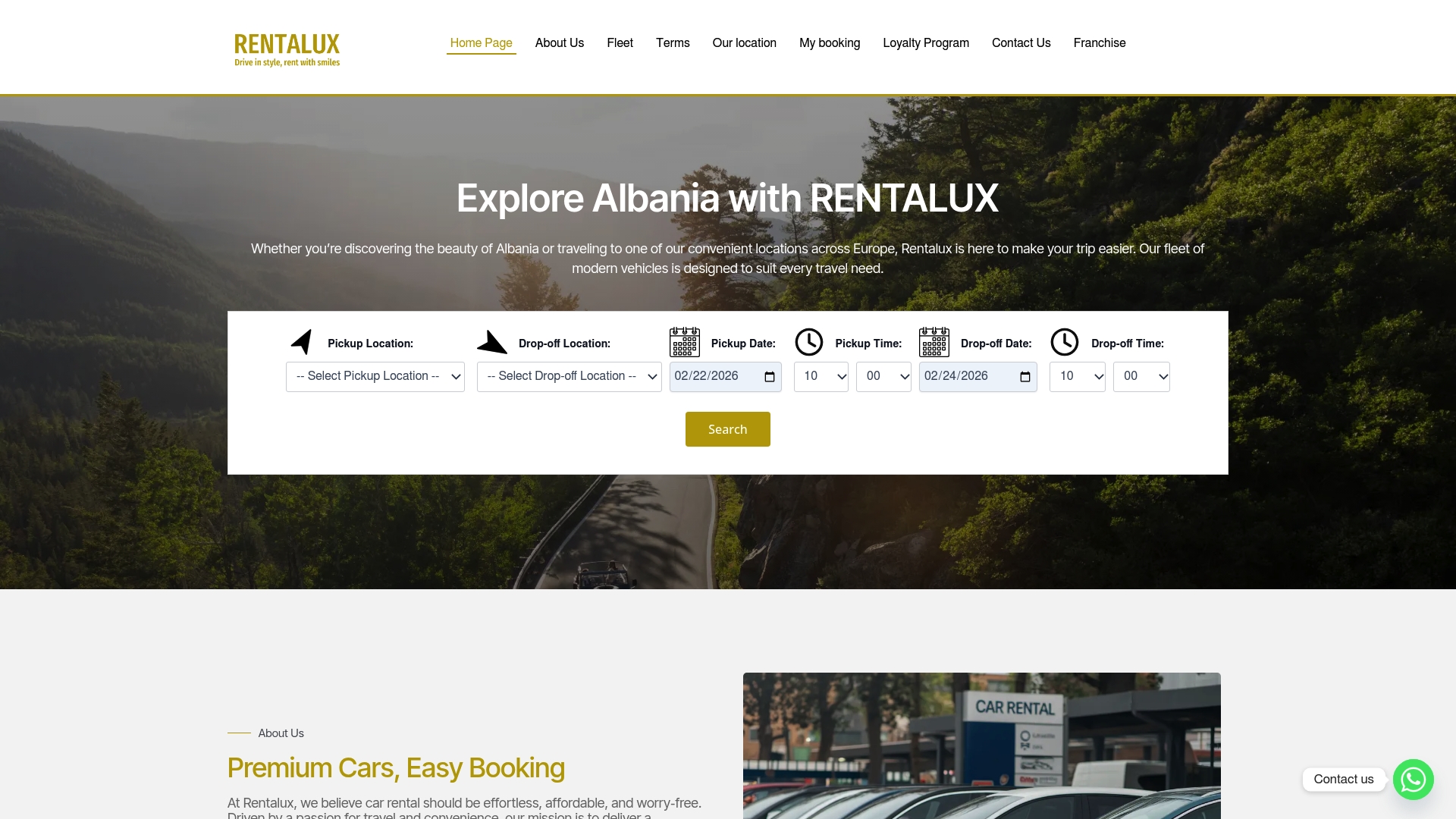
Our flexible car rental policy addresses the common pitfalls discussed throughout this guide, providing transparent terms without hidden fees that plague industry competitors. You’ll find clear explanations of coverage options, excess amounts, and included protections that enable informed decisions matching your risk tolerance and budget. This transparency extends to our online booking platform where you can compare vehicles, read detailed specifications, and secure reservations that lock in competitive rates.
Business travelers appreciate our priority airport locations offering expedited pickup that gets you on the road within minutes of landing. Leisure explorers benefit from our rental car fleet featuring modern, well-maintained vehicles equipped with navigation systems and comfort features that enhance long-distance journeys. Whether you’re attending corporate meetings across multiple cities or discovering countryside villages at your own pace, Rentalux provides the reliable transportation foundation your trip deserves.
Pro Tip: Book your Rentalux rental well ahead of peak summer and holiday seasons when demand drives prices higher and vehicle selection narrows, securing both better rates and your preferred car category.
FAQ
What documents do I need to rent a car in Europe?
You’ll need a valid driver’s license from your home country plus a credit card in the primary driver’s name for the security deposit. An International Driving Permit is recommended for extended trips or when visiting smaller towns where local authorities may prefer standardized documentation. The IDP translates your license information into multiple languages, providing reassurance during potential traffic stops or insurance claims.
Is renting always more expensive than public transportation in Europe?
Cost effectiveness depends heavily on your group size, destinations, and trip duration rather than following a universal rule. Renting proves cheaper for groups of three or more travelers splitting costs, particularly when visiting multiple locations over several days. Solo travelers sticking to major cities connected by efficient rail networks often find public transport more economical, while families and those exploring rural areas typically save money by renting.
When does leasing a car become a better option than renting?
Leasing makes financial sense for trips exceeding three weeks when daily rental rates accumulate to exceed lease program costs. These programs typically include comprehensive insurance, newer vehicle models, and simplified paperwork compared to traditional rentals. Review our long-term rental guide to understand break-even points and coverage differences between standard rentals and lease arrangements.
How can I avoid unexpected charges when renting a car in Europe?
Thorough preparation prevents most surprise fees that catch travelers off guard. Read all rental terms before booking, understanding what your base rate includes and excludes regarding insurance, mileage, and fuel policies. Comparing multiple providers reveals pricing variations and helps identify the most transparent operators. Document vehicle condition with photos at pickup and return, and familiarize yourself with car hire terminology specific to European markets before your trip begins.