
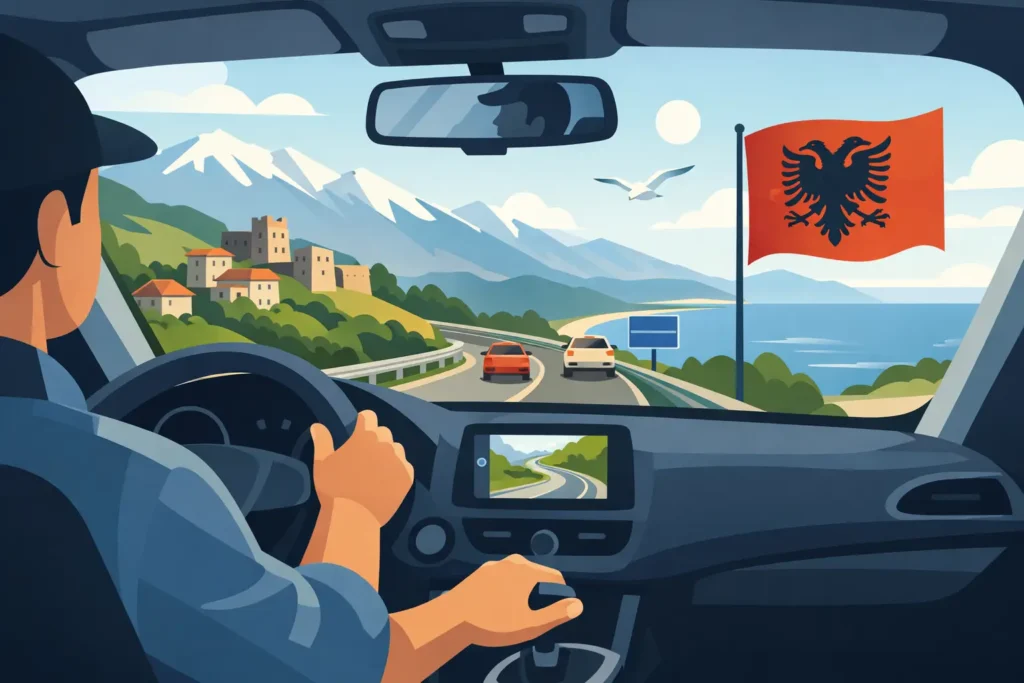
You notice it fast once you leave the airport – Albania rewards drivers. Beaches, mountain passes, lakeside towns, and small villages open up in a way buses and schedules simply cannot match. If you are wondering how to drive in Albania, the good news is that it is very manageable for most US and international travelers once you know what to expect.
Driving here is less about complicated rules and more about reading the road well. In major corridors, roads have improved a lot, signage is generally clear, and the distances between destinations are shorter than many visitors expect. The adjustment comes from local traffic flow, city movement that can feel improvisational, and rural stretches where conditions change quickly.
How to drive in Albania without stress
The easiest way to approach Albania is to drive defensively, stay flexible, and avoid rushing. If you try to force a strict rhythm onto every road, you may find the experience tense. If you leave a little margin for slower traffic, quick overtakes by other drivers, and the occasional surprise around a bend, the trip feels far smoother.
For most travelers, the main routes between Tirana, Durres, Vlore, Shkodra, and Saranda are straightforward. You will usually find paved roads and familiar highway-style stretches near the bigger cities. The challenge shifts when you enter busy urban areas or scenic mountain roads, where lane discipline may feel looser than in the US and where road width can narrow with very little warning.
That does not mean driving is unsafe by default. It means attention matters more than assumption. Expect movement from all directions, especially in cities, and you will already be driving well for local conditions.
The road rules visitors should know
If you have driven in Europe before, much of Albania will feel familiar. Traffic drives on the right-hand side. Seat belts are required, and using a phone while driving is not something to treat casually. Speed limits are posted and should be respected, particularly near towns and on roads where conditions change faster than the signs do.
The practical point for visitors is this: road rules exist, but local driving style can be more fluid than what many Americans are used to. You might see quick merges, informal lane choices, and drivers overtaking in places that feel ambitious. Your best response is not to mirror that style. Keep your position, maintain safe space, and let impatient drivers go around you.
Roundabouts also deserve a little extra attention. In theory they are simple, but traffic entering and exiting can be assertive. Slow down early, watch carefully, and avoid making sudden moves.
City driving in Tirana and other busy areas
Tirana is where many travelers feel the biggest learning curve. It is not because the roads are impossible. It is because traffic density, scooters, pedestrians, parked cars, and quick lane changes all happen at once. If you arrive after a long flight, this can feel like a lot.
The smart move is to keep expectations realistic. Inner-city driving is often slower than the map suggests, and parking can take patience. If your hotel offers parking, confirm that before you arrive. That small detail can make the first day much easier.
Outside Tirana, cities like Durres, Vlore, and Shkodra are generally easier to read, though summer traffic near the coast can get heavy. In beach destinations, especially during peak season, roads may bottleneck near promenades and popular access points. A shorter distance does not always mean a quick drive.
Mountain roads and coastal routes
Some of Albania’s best drives are also the ones that ask the most from the driver. The Albanian Riviera route is stunning, but beauty does not replace caution. Sharp turns, elevation changes, and local traffic can all appear within a few minutes of each other.
If you plan to drive through mountain areas or along high coastal roads, choose a car with enough comfort and power for longer climbs. You do not need an oversized vehicle for every route, but a modern, well-maintained car makes a real difference on steeper sections. This is especially true if you are traveling with family, luggage, or several passengers.
Drive these roads in daylight when possible, especially if it is your first time. Night driving reduces your reaction time on curves, and rural lighting can be limited. Add summer traffic or unfamiliar signage, and a scenic route can turn tiring faster than expected.
What surprises first-time drivers most
The biggest surprise is usually not the road quality. It is the unpredictability around otherwise normal roads. You may encounter pedestrians crossing in places that are not ideal, a vehicle stopped briefly at the roadside, or livestock in more rural areas. None of this means your trip will be difficult. It means you should stay mentally present, even on roads that look easy.
The second surprise is that short distances can take longer than expected. Albania is compact, which encourages ambitious day plans. But road conditions, seasonal traffic, and town-center congestion can stretch a route. Build in extra time and your whole trip feels more relaxed.
The third is parking. In central areas and popular beach towns, parking may be limited or informal. Some lots are obvious, some are not, and street parking etiquette can feel less structured than in the US. When possible, choose accommodations with dedicated parking and avoid leaving logistics to chance late in the day.
Renting the right car for Albania
If your trip includes mostly city stays and highway connections, a compact or midsize car usually works well. It is easier to park, easier to maneuver in tighter streets, and often the most practical choice for couples or solo travelers.
If you are planning a multi-stop itinerary with mountains, beaches, and luggage, a larger sedan or SUV brings more comfort. The road itself may not require it every time, but your overall travel experience can. Better ride quality, stronger air conditioning in summer, and extra space all matter more when you are spending full days on the move.
This is where a transparent rental process matters. Clear deposit terms, modern vehicles, and a smooth airport pickup remove stress before the trip even starts. For travelers who want luxury made simple, working with a provider such as Rentalux can turn arrival day into the easy part.
Fuel, tolls, and practical road planning
Fuel stations are widely available on major routes and around cities, so this is not usually a concern. In more remote stretches, though, it is still wise not to wait until the tank is nearly empty. Fill up before heading into mountain regions or less populated coastal segments.
Route planning matters more than people think. Do not assume every GPS suggestion is the best choice, especially if it sends you onto small local roads to save a few minutes. The faster route on a map is not always the easier route in real life. When in doubt, take the more established road.
Tolls are not the defining feature of driving in Albania, but road conditions and seasonal traffic are. Summer weekends, holidays, and peak beach travel hours can all affect drive times more than the distance itself.
Is driving in Albania a good idea for tourists?
For most visitors, yes. If your trip is limited to one city, you may not need a car every day. But if you want to combine Tirana with the coast, explore southern beaches, visit family, or move on your own schedule, driving is often the best option.
It gives you control, comfort, and the freedom to stop where the country is at its best – on the road between destinations, not only inside them. That said, it depends on your confidence level. If heavy city traffic makes you very uneasy, plan lighter driving days at the start. Pick up the car when you are ready to leave the busiest area rather than forcing a stressful first hour.
A simple mindset for a smoother trip
The best answer to how to drive in Albania is not complicated: stay alert, stay calm, and give the road a little respect. Albania is not a place where you need to drive aggressively to keep up. It is a place where patience pays off.
Once you settle into the pace, the country becomes wonderfully accessible. A good car, a realistic schedule, and a confident but unhurried approach will take you a long way – and often to the best parts of the trip.