

You might assume that renting a car for months in Europe is expensive or complicated, but long-term car rental often beats short-term rentals and even car ownership for extended stays. Many travelers overlook this flexible, budget-friendly option when planning their European adventures. This guide breaks down exactly what long-term car rental is, how it works across borders, and how you can secure the best deal for your next multi-month journey through Europe.
Table of Contents
- Understanding Long-Term Car Rental: Definition And Benefits
- Navigating Cross-Border Travel And Contract Flexibility In Europe
- Comparing Long-Term Rental, Leasing, And Car Ownership Costs
- How To Choose And Book The Best Long-Term Car Rental For Your European Stay
- Discover Flexible Long-Term Car Rental Options With Rentalux
- Frequently Asked Questions
Key takeaways
| Point | Details |
|---|---|
| Cost savings | Long-term rentals reduce daily rates by 20-40% compared to short-term options, making extended stays more affordable. |
| Cross-border flexibility | Most European rentals allow border crossings, though Eastern European travel may incur surcharges and require advance notice. |
| Contract adaptability | Monthly renewals, vehicle swaps, and customizable mileage limits give you control throughout your rental period. |
| Clear terms matter | Understanding inclusions like insurance, roadside assistance, and hidden fees ensures a smooth, surprise-free experience. |
Understanding long-term car rental: definition and benefits
Long-term car rental means renting a vehicle for over one month, typically ranging from four weeks to several months or even a year. This differs dramatically from short-term rentals that last days or weeks. The pricing structure changes entirely once you commit to longer durations.
Short-term rentals charge premium daily rates because rental companies anticipate frequent vehicle turnover, administrative costs, and cleaning between customers. Long-term agreements eliminate these repetitive expenses. Savings can range from 20% to 40% or more depending on your rental duration and vehicle choice, thanks to reduced daily rates and fewer processing fees.
Beyond price advantages, long-term car rental offers cost-effectiveness compared to short-term rentals, especially for stays exceeding one month, due to bundled services. Most contracts include comprehensive insurance, roadside assistance, and maintenance at no extra charge. You avoid the hassle of multiple pickups, returns, and paperwork renewals that plague shorter rentals.
Contract features add further appeal. Monthly renewals let you extend or end your rental with minimal notice. Many companies allow vehicle switches if your needs change, swapping a compact city car for a larger model before a road trip. This adaptability makes long-term rental ideal for travelers whose plans evolve.
Key benefits include:
- Lower daily rates that decrease substantially after the first month
- Bundled services covering insurance, maintenance, and support
- Flexible vehicle selection with options to upgrade or downgrade
- Simplified administration with single contracts instead of repeated bookings
- Predictable monthly costs without surprise charges
Pro Tip: Before signing, confirm exactly what your monthly rate covers. Some packages include unlimited mileage and full insurance, while basic plans charge extra for these essentials. Knowing inclusions upfront prevents budget surprises and helps you understand car hire terminology explained better.
Navigating cross-border travel and contract flexibility in Europe
Cross-border travel is generally permitted with long-term rentals in Europe but has restrictions and surcharges, especially in Eastern Europe. Understanding these rules prevents costly mistakes and travel disruptions during your European adventure.
Most Western European countries allow unrestricted movement between borders. You can typically drive from France to Germany to Austria without additional fees or permissions. However, Eastern European nations often require special authorization and may trigger surcharges. Countries like Albania, Bosnia, Bulgaria, and certain Balkan states frequently appear on restricted lists.
Rental companies require advance notice of your intended travel routes. Disclosing your plans lets them provide necessary documentation like the Green Card, an international insurance certificate proving coverage across borders. Without this card, border authorities may deny entry or issue fines.
Typical cross-border considerations include:
- Western Europe generally permits free movement across most countries
- Eastern European travel often requires approval and incurs daily surcharges
- Insurance extensions may cost extra for higher-risk destinations
- Some luxury or new vehicles face complete travel bans to certain regions
- Advance notification prevents documentation issues at border crossings
Rental companies offer flexible contract terms, including vehicle switching and customizable mileage limits. Monthly contracts typically renew automatically unless you provide notice. This simplicity means you focus on travel rather than administrative tasks.
Mileage limits vary widely. Some long-term contracts include unlimited kilometers, perfect for extensive touring. Others set monthly caps like 2,500 or 5,000 kilometers, with per-kilometer charges beyond that threshold. Match your expected driving to the right plan, as excess mileage fees add up quickly on long journeys.
Vehicle flexibility shines in long-term arrangements. Need a compact car for city exploration but want an SUV for a mountain trip? Many companies let you swap vehicles mid-contract for a modest fee. This beats maintaining multiple short-term rentals or being stuck with an unsuitable car.

Contract modifications work smoothly when you understand your flexible car rental policy options. Extensions usually require just a few days’ notice. Early returns might trigger penalties, though some companies waive fees if you provide adequate warning. Always clarify these terms before signing to maintain maximum flexibility throughout your stay.
Pro Tip: Keep a digital folder with your rental contract, Green Card, and border authorization documents. Border officials may request proof at crossings, and having instant access via your phone saves time and stress. Understanding how to rent a car in Europe ensures smoother experiences.
Comparing long-term rental, leasing, and car ownership costs
Choosing between long-term rental, leasing, and buying a car depends on your stay duration, budget, and commitment level. Each option carries distinct financial implications and practical considerations that affect your total expenditure.
Leasing resembles long-term rental but involves different contract structures. Leases typically last one to three years with fixed monthly payments. Long-term leasing includes predictable monthly costs covering maintenance, insurance, and roadside assistance. You drive a new vehicle with manufacturer warranty protection, avoiding repair surprises.
However, leasing contracts impose stricter mileage limits than many rentals. Exceeding your annual allowance triggers substantial per-kilometer charges. Early termination fees can reach thousands of euros. Leasing also requires credit checks and longer commitments, making it less suitable for travelers with flexible timelines.
Car ownership involves depreciation, repairs, insurance, and financing payments, often higher overall costs. New cars lose 15-20% of value in the first year alone. Maintenance expenses become unpredictable as vehicles age. Registration, taxes, and comprehensive insurance add ongoing costs throughout ownership.
For temporary European stays, ownership rarely makes financial sense. You face substantial upfront costs, ongoing expenses, and the hassle of reselling before leaving. Unless you plan to stay several years or need a vehicle permanently, rental or leasing provides better value.
| Option | Monthly Cost | Flexibility | Maintenance | Best For |
|---|---|---|---|---|
| Long-term rental | €500-1,200 | High, cancel anytime | Included | 1-12 month stays, flexible plans |
| Leasing | €300-800 | Low, fixed term | Included | 1-3 years, predictable needs |
| Ownership | €400-1,000+ | None, must sell | Your responsibility | Permanent residents, 3+ years |
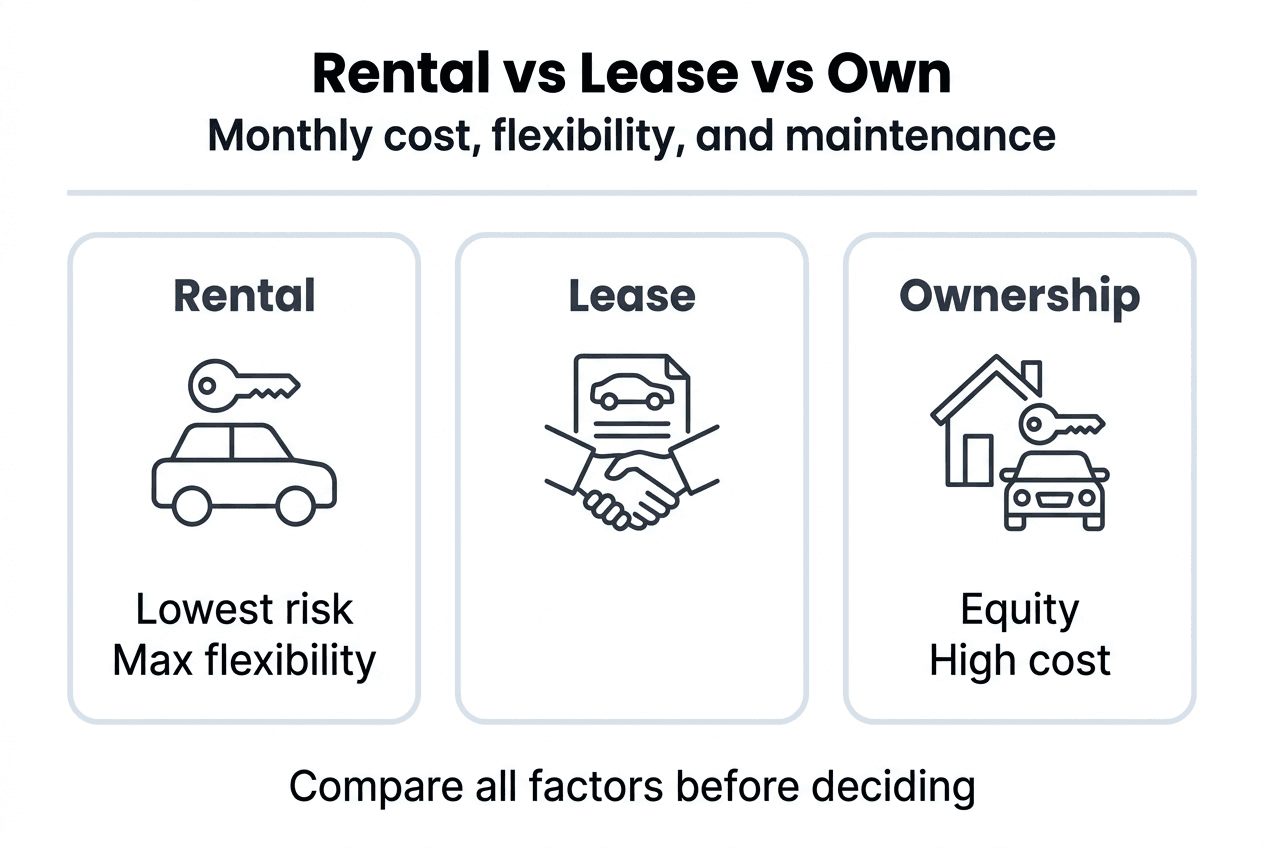
Rental offers unmatched flexibility for travelers. No long-term commitment means you can end your contract with minimal notice. Insurance, maintenance, and roadside assistance come bundled in your rate. You avoid depreciation losses and resale headaches entirely.
Leasing suits those certain about extended stays with predictable driving patterns. Lower monthly costs than ownership make sense for multi-year commitments. Just ensure your mileage estimates are accurate, as excess charges negate savings.
Ownership makes sense only for permanent relocation or stays exceeding three years. You build equity rather than paying for usage, and customization freedom lets you modify the vehicle. However, upfront costs, maintenance risks, and depreciation often outweigh rental or leasing for shorter periods.
Pro Tip: Calculate your total expected mileage before choosing. If you plan extensive touring exceeding 30,000 kilometers yearly, ownership might actually cost less than leasing’s excess mileage penalties. For moderate driving under 20,000 kilometers annually, rental or leasing typically wins. Compare these options alongside car hire vs car sharing growth signals to understand broader mobility trends.
How to choose and book the best long-term car rental for your European stay
Securing the ideal long-term rental requires strategic planning and attention to contract details. Following a systematic approach helps you avoid common pitfalls while maximizing value and convenience throughout your European stay.
Booking in advance and informing the rental company about your travel plans ensures smooth experience and availability. Last-minute bookings limit vehicle selection and often come with premium pricing. Reserve at least four to six weeks ahead for popular seasons or destinations.
Assess total costs beyond the advertised base rate. Insurance options range from basic liability to comprehensive collision damage waivers. Fuel policies vary, with full-to-full being fairest but requiring you to refill before return. Additional driver fees, GPS rental, and child seats add up quickly.
Vehicle selection should match your specific itinerary. Compact cars suit city exploration with tight parking and narrow streets. SUVs or estates make sense for mountain regions or traveling with substantial luggage. Consider fuel efficiency for extensive touring, as diesel often costs less per kilometer than gasoline for long distances.
Location convenience affects your overall experience. Airport pickups offer arrival ease but typically include surcharges. Downtown offices might provide better rates and local expertise. Weigh convenience against cost based on your entry point and accommodation location.
Contract clauses demand careful review. Mileage limits should align with your expected driving. Extension policies should be clear, specifying notice periods and rate changes. Return condition requirements vary, with some companies charging for minor scratches while others only penalize significant damage.
Best practices for booking:
- Research multiple providers comparing total costs including insurance and fees
- Read customer reviews focusing on contract transparency and customer service
- Disclose all intended countries and border crossings upfront
- Confirm what insurance coverage is included and what costs extra
- Understand mileage limits and per-kilometer charges for excess driving
- Clarify extension and early return policies including any penalties
- Verify pickup and return procedures to avoid last-minute confusion
Comparison sites can be misleading as extras often increase the real rental price; check terms and conditions carefully. The advertised rate rarely reflects your final cost once mandatory insurance, taxes, and fees are added.
Common pitfalls to avoid:
- Hidden fees buried in contract fine print like cleaning charges or toll passes
- Inadequate insurance leaving you liable for thousands in damage costs
- Cross-border restrictions you discover only when trying to enter another country
- Mileage limits that seemed generous but prove insufficient for touring
- Last-minute bookings that force you into unsuitable vehicles or inflated prices
- Failing to document existing damage during pickup, risking return disputes
Photograph the vehicle thoroughly during pickup, capturing any existing scratches, dents, or interior wear. These images protect you from unfair damage claims when returning the car. Walk around with the agent, ensuring all damage appears on the checkout report.
Understand local driving regulations and requirements. International Driving Permits may be mandatory in certain countries even with your home license. Vignettes for highway use in Austria, Switzerland, and Slovenia must be purchased separately. Winter tire requirements apply seasonally in Alpine regions.
Explore options for car rental for leisure travel in Europe or discover why opt for rental cars in Europe for hassle-free travel to understand broader benefits. If you prefer premium vehicles, learn how to rent luxury cars in Europe guide for specialized insights.
Discover flexible long-term car rental options with Rentalux
Now that you understand how long-term car rental works, finding the right provider makes all the difference in your European travel experience. Rentalux offers a comprehensive fleet of modern vehicles perfectly suited for extended stays across Europe.
Our flexible car rental policy lets you adjust your contract as your travel plans evolve. Monthly renewals mean no long-term commitment beyond your immediate needs. Vehicle exchanges accommodate changing requirements, whether you need a larger car for guests or a fuel-efficient compact for solo touring.
Competitive pricing structures deliver real savings for longer rentals. Transparent terms eliminate surprise charges, with clear explanations of what your rate includes. Our rental car fleet in Albania showcases quality vehicles maintained to the highest standards, ensuring reliability throughout your journey.
Exceptional customer support guides you through booking, pickup, and any questions during your rental period. Visit Rentalux home page to explore options, compare rates, and start planning your extended European adventure with confidence.
Frequently asked questions
What duration qualifies as long-term car rental?
Long-term car rental typically begins at four weeks or one month and can extend to several months or even a year. Some companies offer special rates starting at three-week rentals, though the best savings appear after the first month when daily rates drop significantly.
Can I drive my long-term rental car across European borders without extra charges?
Cross-border travel is usually permitted within Western Europe without additional fees, but Eastern European countries often require advance approval and may incur daily surcharges. Always notify your rental company of intended countries before traveling to ensure proper insurance documentation and avoid border issues.
Are there mileage limits in long-term car rental contracts?
Mileage policies vary by contract and provider. Some long-term rentals include unlimited kilometers, ideal for extensive touring, while others set monthly caps between 2,500 and 5,000 kilometers with per-kilometer charges for excess driving. Choose a plan matching your expected travel distance to avoid surprise costs.
What happens if I want to return the car early or extend the rental?
Most long-term contracts allow extensions with a few days’ notice at your existing rate or current pricing. Early returns may incur penalties depending on your contract terms, though some providers waive fees with adequate advance warning. Review your specific agreement’s flexibility clauses before signing to understand your options.
How do long-term rentals compare to leasing or owning a car for a short stay?
Long-term rentals offer superior flexibility with no commitment beyond monthly renewals, making them ideal for stays under one year. Leasing requires longer commitments with stricter mileage limits but may cost less monthly for multi-year stays. Ownership involves substantial upfront costs and depreciation, only making financial sense for permanent residents or stays exceeding three years.